TB-5231 · REV E · Technical newsheet
Electronic TestDevice profile
Tektronix DPO Oscilloscope Carries EPYC CPU, T1000 GPU, 96GB RAM
Tektronix's 38 kg DPO oscilloscope integrates a 12-core AMD EPYC CPU, Nvidia T1000 GPU, 96 GB RAM and 1.6 TB NVMe storage, running Windows 10 on a 15.6-inch FHD display.
By Sophie Lindqvist3 min read549 words
Features
- The Tektronix DPO oscilloscope includes a 12-core AMD EPYC CPU and Nvidia T1000 GPU.
- The instrument carries 96 GB of RAM and a 1.6 TB NVMe SSD.
- It weighs 38 kg and features a 15.6-inch Full HD display.
- The scope can run Windows 10 as its operating system.
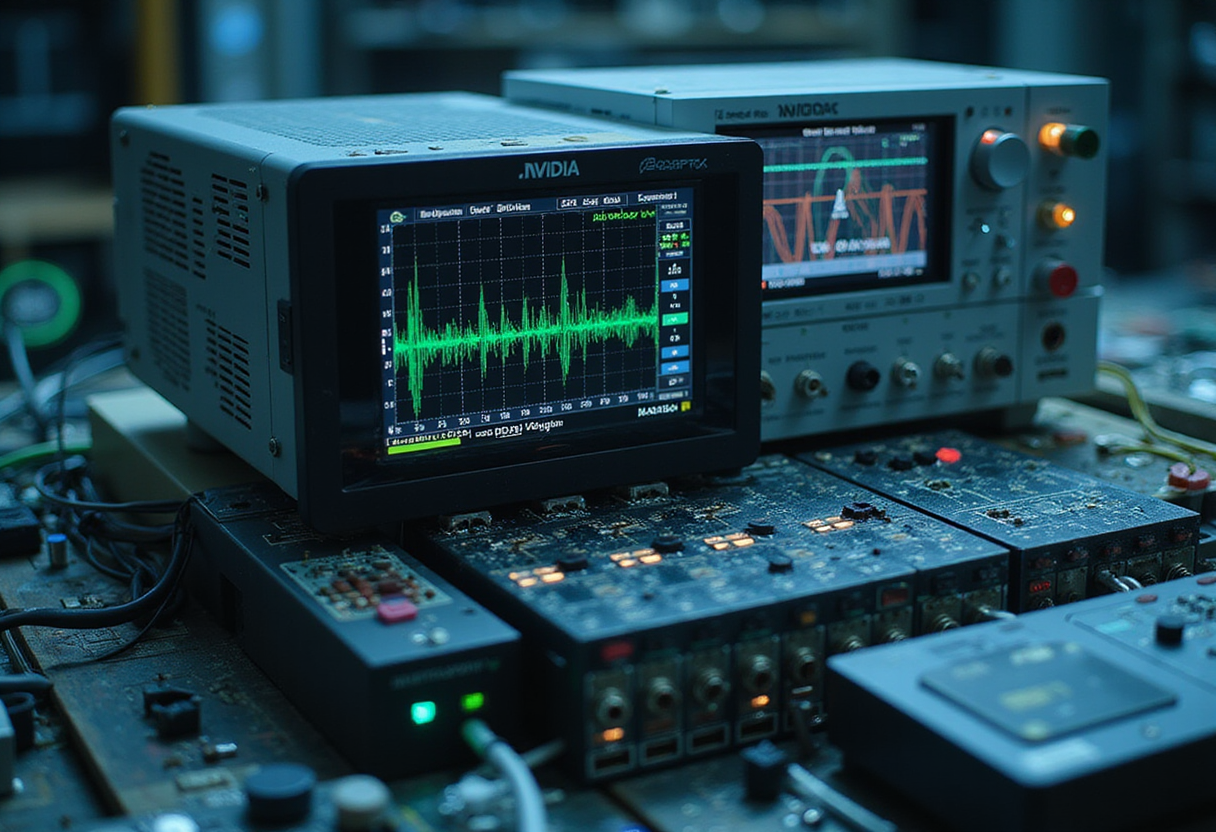
A Tektronix DPO oscilloscope now ships with hardware that would not look out of place in a workstation rack: a 12-core AMD EPYC CPU, an Nvidia T1000 GPU, 96 GB of RAM, and a 1.6 TB NVMe SSD. The instrument weighs 38 kg and runs Windows 10 on a 15.6-inch Full HD display.
The configuration marks a further step in the convergence of test instrumentation and general-purpose computing. Modern DPO-class scopes must capture, store, and analyze gigabyte-scale waveform records in real time, and the processing pipeline — not the front-end amplifier — often sets the practical limit on throughput during long acquisitions.
Why put a server CPU in a bench scope?
A 12-core EPYC gives the instrument headroom for parallel analysis tasks: FFT computation, mask testing, and offline processing of deep memory captures. The 1.6 TB NVMe SSD addresses acquisition storage directly, allowing long-duration captures at high sample rates without streaming to an external controller. The T1000 GPU, a mid-range professional card, handles display rendering and can accelerate math channels and visualization of large record lengths on the 15.6-inch 1920×1080 panel.
Windows 10 as the operating system matters for workflow. Engineers can run analysis software, MATLAB or Python scripts, and instrument control tools natively on the scope rather than transferring raw captures to a separate PC. That removes a bottleneck in automated test setups and in debug sessions where iteration speed dominates.
What are the practical trade-offs?
The 38 kg weight places this instrument firmly in the lab-bench and rack category. It is not a field instrument. Buyers should verify mechanical clearances and power requirements before specifying it for a crowded bench or an ATE rack.
The vendor's headline specifications — core count, memory capacity, storage volume — are compute-side figures. They say nothing directly about analog bandwidth, sample rate, or vertical resolution, which remain the parameters that define measurement capability. Procurement teams should request the full datasheet and confirm the front-end specifications against their signal-integrity requirements, since the compute platform serves the acquisition system, not the other way around.
Who is this for?
The target applications are ones where deep memory analysis and in-instrument processing pay for themselves: serial protocol debugging, power integrity characterization, and long-duration capture of intermittent events. In these workflows, the ability to store 1.6 TB of acquisitions locally and process them on 12 cores without leaving the instrument changes the effective duty cycle of a measurement campaign.
The Windows 10 support also raises a lifecycle question that metrology labs will ask first: how will OS security patching and eventual end-of-support align with the instrument's calibration and support intervals? A scope that doubles as a general-purpose PC inherits the patch-management burden of one. Labs operating under ISO 17025 or similar quality systems will need to document that policy before deployment.
The underlying shift is clear: as waveform records grow into the multi-gigabyte range, the oscilloscope has become a compute platform with an acquisition front end. The question buyers should now ask is not whether the instrument can make the measurement, but whether its compute specification — and its software maintenance posture — will still fit their workflow five years into ownership.
via Google News: Oscilloscopes and test equipment (Source)
Filed under
- oscilloscope
- tektronix
- dpo
- deep-memory
- waveform-analysis
More from Sophie Lindqvist
Show full bio
News editor covering marketplaces and e-commerce at Testbench Report.
66 articles