TB-7527 · REV A · Technical newsheet
Sensors & InstrumentationDevice profile
Yokogawa Ships Split-Core AC/DC Current Sensors Aimed at EV and AI Data Center Power Work
Yokogawa T&M has released AC/DC split core current sensors targeting EV and AI data center power measurement, where clamp-on access to high-current DC buses is the deciding factor.
By Olivia Hart3 min read669 words
Features
- Yokogawa Test & Measurement has released a family of AC/DC split core current sensors.
- The sensors target electric vehicle and AI data center power measurement applications.
- The split-core clamp-on design permits current measurement without breaking the circuit.
- The AC/DC rating addresses DC-dominant buses in EV powertrains and GPU server racks.
- The release does not yet publish accuracy class, bandwidth, or safety category ratings.
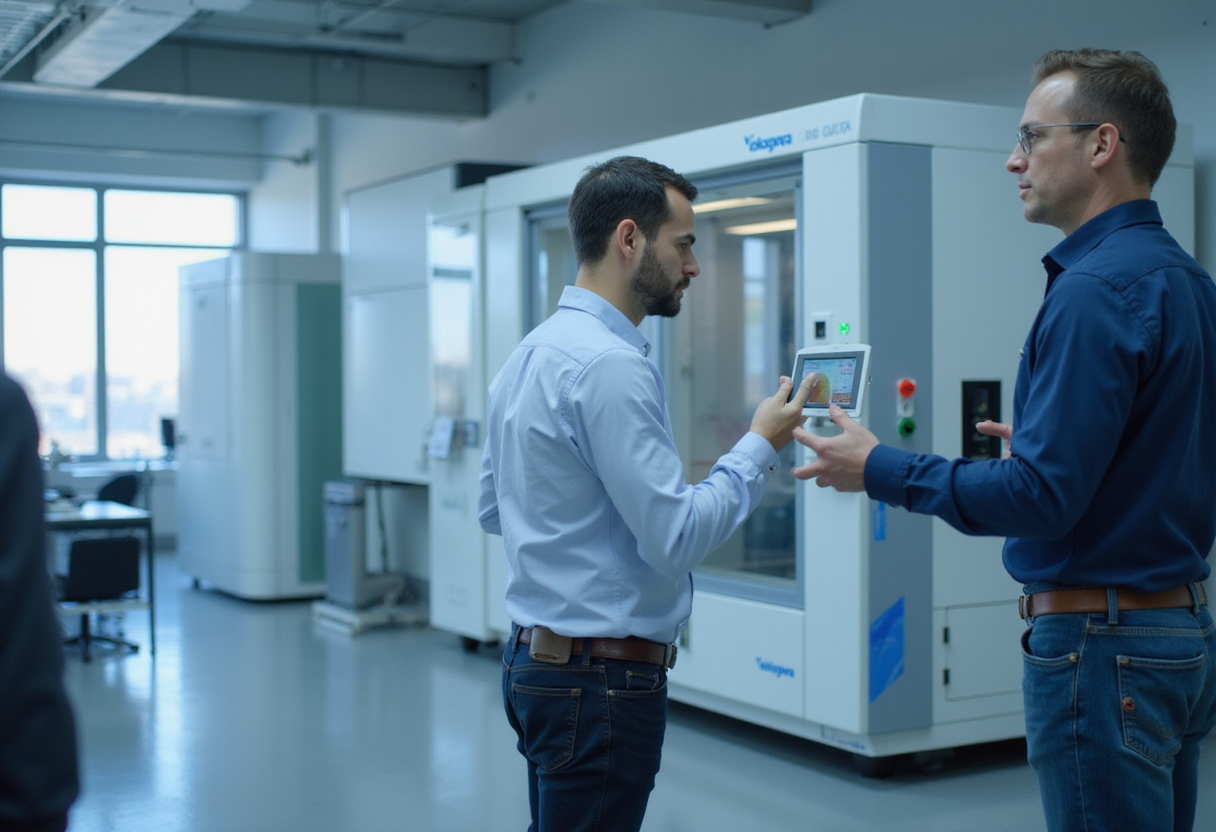
Yokogawa Test & Measurement has released a family of AC/DC split core current sensors, positioning the clamp-on form factor squarely at power measurement work in electric vehicles and AI data centers, two applications where currents run high, DC dominates, and physical access to a conductor is often the hardest part of the job.
The product announcement, carried by Embedded Computing Design, gives no full electrical specification set in the release text, so the buying questions below focus on what the split-core architecture itself implies and what a test engineer should demand from the datasheet before committing a purchase order.
Why split core matters for EV and data center work
A split core — a ferrite or similar magnetic circuit that opens on a hinge — lets the user clamp the sensor around an existing conductor without breaking the circuit. In an EV powertrain or a battery test bench, breaking a high-current DC bus to insert a series shunt is invasive and introduces an additional failure point and thermal load. In an AI data center, where operators are racing to characterize rack-level power draw from GPU-loaded servers, conductors are frequently inaccessible except by clamping.
The AC/DC rating is the second operational point. EV batteries, DC distribution buses, and modern server racks operate at DC or mixed waveforms, which rules out current transformers that respond to AC only. A sensor that reads both must rely on a DC-capable transduction principle — typically Hall effect, fluxgate, or a mixed Hall/CT topology — and the choice among those sets the offset drift, linearity, and bandwidth the user will actually see on the bench.
What the datasheet must answer
Because the release does not publish the numbers, the evaluation checklist is the story. Items a metrologist would verify against rival clamp sensors from Hioki, Fluke, and Tektronix:
- Accuracy class and the current range over which it holds, stated separately for DC and AC, with the calibration conditions (conductor position inside the aperture is the classic trap for split-core devices — position sensitivity can dominate the error budget).
- Bandwidth and derating, since EV inverter work requires capturing switching-frequency components, not just the fundamental.
- Offset drift with temperature and time, which for Hall-based sensors determines whether a zero check before each measurement session is enough or whether the drift corrupts low-current readings stacked on high-current DC offsets.
- Aperture size and conductor gauge rating against the bus bars and cables actually installed in the target racks and packs.
- Output interface — analog voltage into a scope or power analyzer, or a direct digital link — and its compatibility with the existing instrument fleet.
The application pull
The two named target markets are not incidental. EV development benches spend heavily on battery and inverter characterization, and every watt-hour of measurement uncertainty propagates directly into range and efficiency claims. Data center operators, meanwhile, face power densities that GPU clusters push to rack levels an order of magnitude above the legacy 5–10 kW assumptions, and they need portable, clampable instrumentation to audit where the current actually goes without downtime.
A clamp sensor that a technician can install on a live DC bus changes the economics of that audit: no scheduled outage, no re-termination, and repeatable placement if the position sensitivity is controlled. Yokogawa's brand strength in power analyzers suggests these sensors are intended to pair with that instrument line, which is worth confirming with the vendor before specifying.
What adoption hinges on
The open compliance question: does the sensor family carry the safety ratings — CAT III/CAT IV measurement categories and the applicable DC voltage ratings — needed for connection to EV high-voltage systems and facility-level DC distribution? A clamp sensor without the right installation category rating cannot legally or safely serve the very applications it is marketed for, no matter how clean its transfer characteristic. Buyers should ask Yokogawa for the full specification sheet and the calibration interval recommendation before qualifying the devices for production or field use.
via Google News: Test and measurement instruments (Source)
Filed under
- current-sensors
- yokogawa
- electric-vehicles
- data-center-power
- power-measurement
More from Olivia Hart
Show full bio
Market editor covering media and advertising at Testbench Report.
63 articles
Application notes
- Aemulus and Samsung Electro-Mechanics Move Test Collaboration Into Commercial Supply
- Rohde & Schwarz Brings Three-Phase Power Analysis to MXO Scopes
- Bregal Sagemount Takes Majority Stake in Electrical Test Gear Lender A-Rent
- Samsung, SK Hynix Capex Cycle Lifts Korean Chip-Test Equipment Orders
- 1 GHz, 12-bit MXO3 Turns RF Current Probes Into Bench EMC Pass/Fail Tool