TB-7680 · REV B · Technical newsheet
Sensors & InstrumentationDevice profile
Thin-Film Platinum RTD Demand Projected Through 2035 In IndexBox Outlook
IndexBox projects thin-film platinum RTD demand through 2035, tied to EV battery thermal management, charging infrastructure, and IIoT process telemetry. IEC 60751 accuracy classes and 10-to-15-year calibration drift budgets now drive the buy question.
By Grace Kim4 min read817 words
Features
- IndexBox projects thin-film platinum RTD market demand through 2035, citing electrification and IIoT as growth drivers.
- IEC 60751 specifies the 3850 ppm/°C platinum curve across Class AA (±0.10 °C at 0 °C), Class A (±0.15 °C), and Class B (±0.30 °C) tiers.
- Traction motor windings hold 180 °C continuously with peaks near 250 °C at the slot liner, the regime that drives Class A thin-film uptake.
- Callendar-Van Dusen coefficients A = 3.9083 × 10⁻³, B = −5.775 × 10⁻⁷, C = −4.183 × 10⁻¹² are the IEC 60751 reference values for in-system calibration constants.
- Standards chain for a 2035 thin-film design-in includes IEC 60751:2022, ISO 17025 certificates, ISO/SAE 21434 for IIoT cybersecurity, and IEC 61508 SIL math for safety.
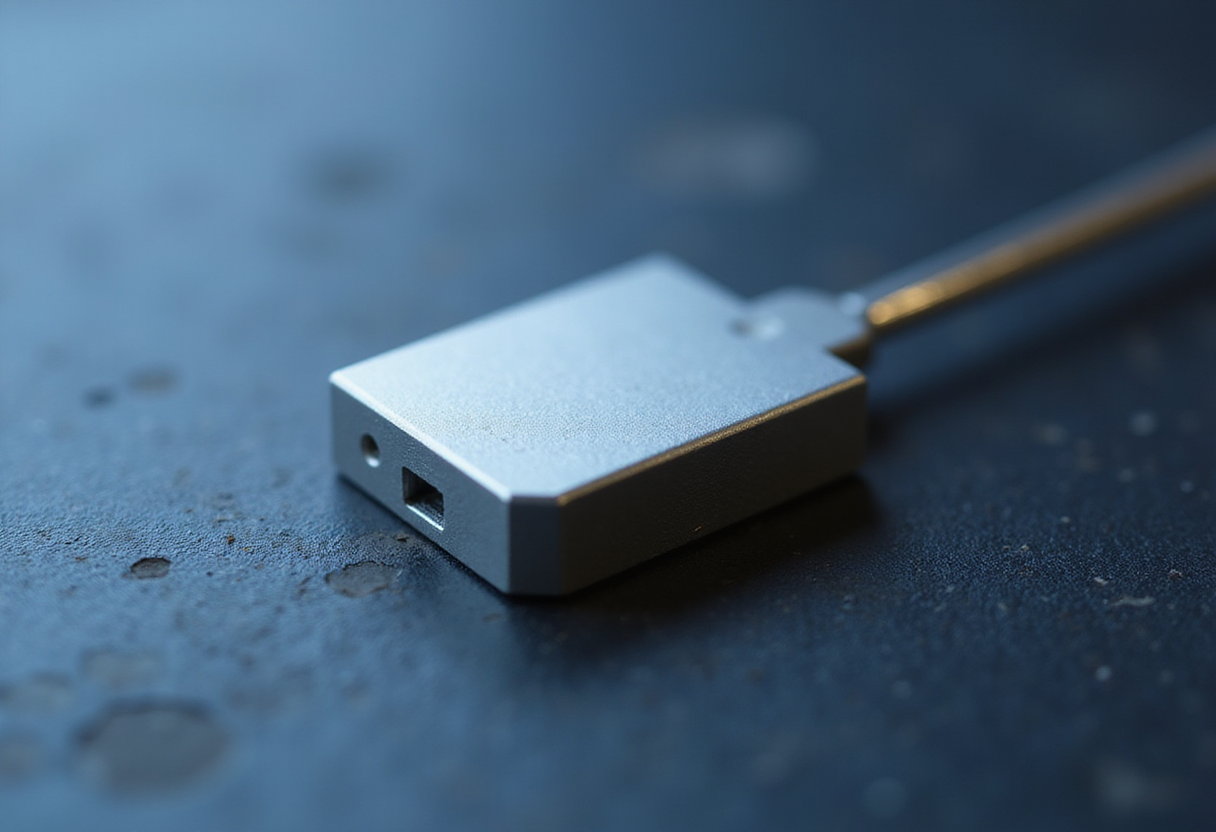
Thin-film platinum resistance temperature detectors built to IEC 60751 — typically PT100 (100 Ω at 0 °C) or PT1000 (1,000 Ω at 0 °C) elements in Class AA, A, B, or C grades — anchor a market outlook IndexBox now projects to 2035.
The forecast ties sensor volume to two loads: electrification of road transport and process heat, and the Industrial Internet of Things (IIoT) data fabric that connects those assets to cloud historians.
What the two load profiles look like
IndexBox names battery and power-electronics thermal management as the first load. Traction motor windings hold 180 °C continuously with peaks near 250 °C at the slot liner, and DC charging plugs sense socket temperatures near 80 °C in continuous duty.
The second load is wireless process telemetry. ISA100.11a and WirelessHART gateways replace legacy 4-20 mA loops, and PT1000 thin-film elements cut lead-resistance error by an order of magnitude on the multi-metre cable runs typical of refinery and pharmaceutical skids.
How thin-film parts differ on the bench
Thin-film and wire-wound RTDs both deliver the IEC 60751 platinum 3850 ppm/°C curve, but three buyer-visible parameters separate them:
- Element construction — a platinum film typically 1 nm to 2 µm thick, photolithographically patterned and laser-trimmed onto alumina or zirconia ceramic.
- Thermal mass — τ₀.₆₃ below 1 s in SMD-style packages, lower than a comparable wire-wound assembly, preserving fidelity during ramping events in process-fluid or motor-winding profiles.
- Vibration tolerance — wire-bonded or laser-trimmed meanders ride through 20 g to 40 g sweeps in traction inverter compartments.
Long-term drift at 600 °C-rated thin-film lots sits between 0.1 °C and 0.5 °C per 1,000 hours depending on manufacturer and sealing, against a lower baseline for hermetically sealed wire elements. Takeaway: thin-film wins on thermal mass and vibration; wire-wound still wins on drift once a part is sealed.
Which accuracy class survives the new loads
The IndexBox framing concentrates new volume into two temperature regimes. EV traction motor and inverter IGBT modules sit in the 150 °C to 250 °C band, where Class A thin-film elements — ±0.15 °C at 0 °C and ±0.35 °C at 100 °C per IEC 60751 — remain the workhorse. Delta-sigma ADCs typically run at 100 Hz to 200 Hz updates for 16-bit effective resolution.
Charging-cable and battery-pack skin applications at 60 °C to 90 °C accept Class B (±0.30 °C at 0 °C, ±0.80 °C at 100 °C), sometimes paired with a K-type thermocouple for hot-spot pickup.
Process-side IIoT telemetry uses PT1000 because a 1,000 Ω base resistance reduces parasitic lead drop to the millikelvin level on long runs. Self-heating budgets tighten as gateway transmitters shrink: manufacturers publish 0.1 °C to 0.5 °C rise per milliwatt of sensor power at 0 °C water-bath conditions for typical 1 mA to 5 mA excitation. Takeaway: Class A PT100 for traction and inverter; PT1000 and Class B for IIoT process telemetry.
What the 2035 window does to calibration
A decade-plus service window rewrites the calibration math. A Class AA element rated ±0.10 °C at 0 °C still drifts at the rate baked into its packaging; field experience on IEC 60751:2022-compliant lots places that drift between 0.1 °C and 0.3 °C per year at 250 °C continuous duty.
Multiplied across 10 to 15 years of intended service, cumulative error drifts past the Class A envelope without a midpoint re-trace.
Two countermeasures now appear on newer datasheets:
- On-die calibration constants stored in EEPROM, matched to the Callendar-Van Dusen coefficients A = 3.9083 × 10⁻³, B = −5.775 × 10⁻⁷, C = −4.183 × 10⁻¹² specified in IEC 60751.
- Dual-element substrates where differential reads verify lead-resistance cancellation in real time.
Both features add a small percentage to the bill of materials and tie the buyer to a single vendor's callendar file format until IEC 60751:2022 adoption plateaus through the back half of the decade. Takeaway: a 2035 design-in needs in-system drift correction or a scheduled re-trace to stay inside spec.
The compliance question this raises
The forecast will quietly push a procurement question. Can a thin-film element carry ISO 17025 traceability across a 10-year-plus service window while it simultaneously feeds IIoT analytics and EV functional-safety arguments?
Standards exist — IEC 60751:2022 for element behaviour, ISO 17025 for the certificate, ISO/SAE 21434 for the cybersecurity of IIoT telemetry, and IEC 61508 SIL math for the safety function. The datasheet alone does not show whether a 2035 design-in will survive an automotive AIS-3 audit at year eight. That tolerance assessment is the engineering question the market outlook leaves in the buyer's lap.
via Google News: Sensors and industrial IoT (Source)
Filed under
- thin-film-platinum-rtd
- iec-60751
- ev-thermal-management
- iiot-process-telemetry
- rtd-calibration
More from Grace Kim
Show full bio
Correspondent covering companies, deals and strategy in Instruments, test and measurement at Testbench Report.
73 articles
Application notes
- Hoopo's hoopoSense Solar Wins 2026 Industrial IoT Product of the Year
- Waste Heat Could Power Industrial Sensing in ECS4DRES Project
- Miniature pressure sensors shift from industrial to OEM design-in
- IDTechEx distils three sensor directions from CES 2026
- APAC Industrial IoT Push Reshapes Edge Instrumentation Requirements