TB-8113 · REV E · Technical newsheet
Sensors & InstrumentationDevice profile
IDTechEx distils three sensor directions from CES 2026
IDTechEx has released a sensor-market briefing drawing on its CES 2026 coverage, identifying three trends with implications for instrumentation buyers weighing accuracy class, interface standards, and calibration intervals.
By Olivia Hart3 min read528 words
Features
- IDTechEx released a sensor-market briefing titled 'Three Key Trends in the Sensor Market from CES 2026'
- CES 2026 ran January 6–9, 2026 in Las Vegas
- IDTechEx is headquartered in Cambridge, UK and publishes technology market intelligence
- The firm's sensor practice covers MEMS, CMOS image sensors, gas sensor arrays, printed/flexible formats, and quantum-effect devices
- Full report content sits behind IDTechEx's subscription access
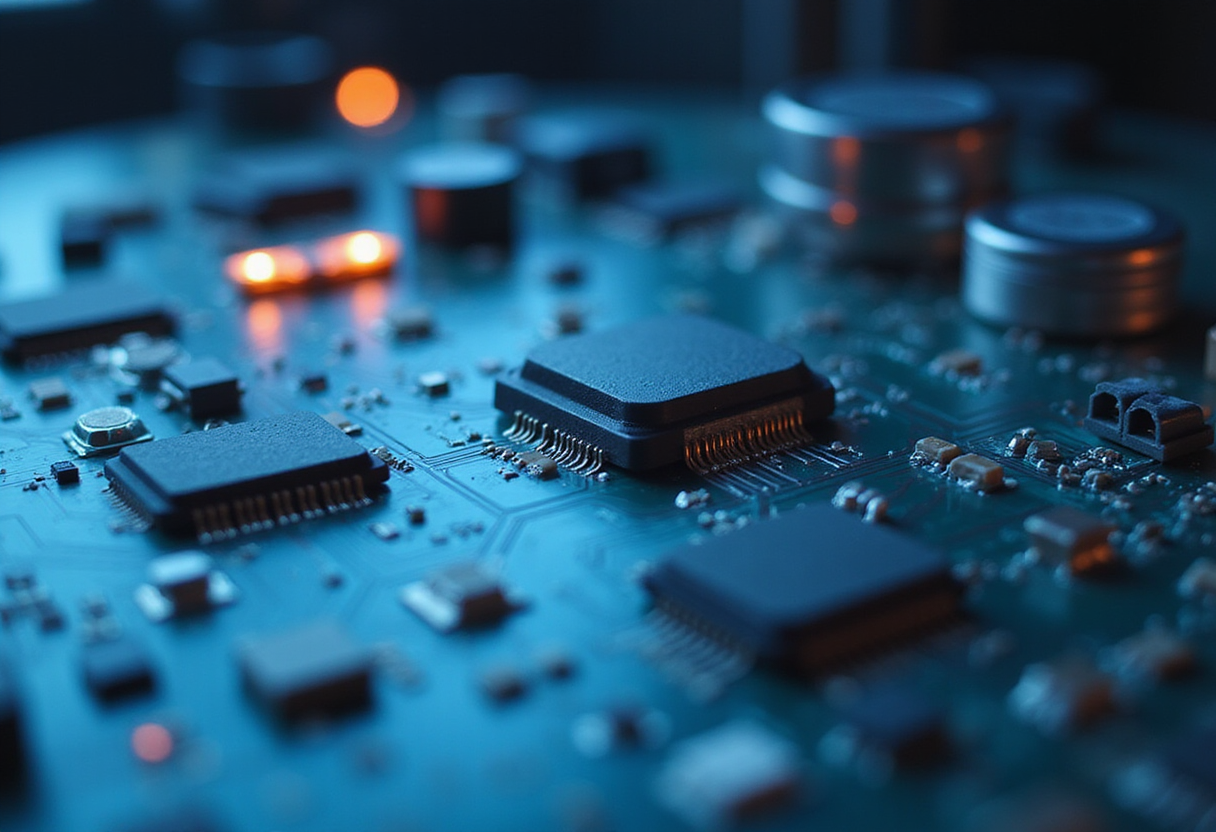
IDTechEx has released a sensor-market briefing drawing on its CES 2026 coverage, identifying three trends the firm observed across the show floor during the January 6–9, 2026 trade event in Las Vegas. The note, titled Three Key Trends in the Sensor Market from CES 2026, distils the firm's coverage of component announcements and analyst briefings during the four-day event.
What does IDTechEx cover in sensor intelligence?
IDTechEx, headquartered in Cambridge, UK, publishes technology market intelligence spanning printed and flexible electronics, energy storage, and sensor subsystems. Its sensor practice covers MEMS inertial units, CMOS image sensors, gas sensor arrays, printed and flexible formats, and emerging quantum-effect devices. CES recaps from the firm have become a recurring reference point for procurement and design teams tracking which MEMS and ToF ranging parts will reach industrial pricing tiers within 12–18 months.
CES 2026 featured the usual clustering of component introductions around IoT infrastructure, health and wellness, and vehicle technology zones. IMU, ToF, mmWave radar, and biosensor announcements in particular drew analyst attention, given their migration paths from consumer wearables into industrial data acquisition and biomedical instrumentation.
What does the briefing mean for instrumentation buyers?
For a test-and-measurement audience, three practical concerns recur when consumer-grade sensors cross over into instrumentation applications.
- Accuracy class. Consumer MEMS parts typically ship with datasheet specifications only at room temperature. Metrology labs that repurpose such a part for an industrial vibration or environmental monitor must budget for individual-unit characterisation against published reference procedures.
- Interface convergence. The protocols emerging in volume at CES — I3C, SPI variants, single-wire options — determine what driver and firmware stacks a calibration lab must support as new parts arrive on incoming-inspection benches.
- Calibration interval. Long-term drift data on consumer-grade sensors is rarely published. Instrumentation users must either source that data through independent qualification or design around shorter calibration cycles than vendor marketing literature implies.
What doesn't the briefing disclose?
The published title points to three trends; the body of the briefing itself sits behind IDTechEx's subscription access. Instrumentation engineers weighing the headline conclusions should cross-check against vendor datasheets and their own qualification data. Consumer-volume claims and instrumentation-grade performance rarely align without independent testing under documented environmental conditions.
That gap matters because datasheet headline numbers typically reflect room-temperature, single-axis, single-frequency characterisation. A MEMS accelerometer qualified to ±0.01 g at 25 °C on the bench may show ±0.05 g or worse across a 0–50 °C industrial range, particularly after the first year of operation. The crossover question CES sensor roadmaps raise is whether instrumentation buyers can rely on supplier-published drift and temperature coefficients, or whether every incoming lot requires re-verification.
Will consumer-grade and instrumentation-grade sensors converge?
The broader adoption question CES 2026 raises for the metrology community is whether consumer-grade sensor qualification regimes will converge with instrumentation accuracy classes, or whether the gap between them continues to widen. IDTechEx's three-trend framing is the latest input into that assessment — one that instrumentation houses will want to read with a calibration notebook open, not a marketing brochure.
via Google News: Sensors and industrial IoT (Source)
Filed under
- mems-sensors
- ces-2026
- sensor-calibration
- idtechex
- consumer-grade-sensors
More from Olivia Hart
Show full bio
Market editor covering media and advertising at Testbench Report.
63 articles
Application notes
- AI Reshapes Test and Measurement, Design News Reports
- Miniature pressure sensors shift from industrial to OEM design-in
- TDK rolls out SensorGPT and SensorStage tools for sensor developers
- IMTS 2026 reframes machine vision for manufacturing
- Edge AI Reshapes Industrial IoT, Semiconductor Engineering Reports