TB-4969 · REV C · Technical newsheet
Test & MeasurementDevice profile
Test Equipment Makers Call Chip Shortage 'Worst-Ever'
Semiconductor test equipment makers face what industry sources call the 'worst-ever' component shortage, putting delivery schedules for ATE platforms at risk.
By Grace Kim2 min read433 words
Features
- Semiconductor test equipment makers face a shortage described as 'worst-ever'
- The report was published by Korean trade outlet TheElec
- The shortage threatens delivery schedules for semiconductor test equipment
- Test gear builders face low purchasing priority versus high-volume component buyers
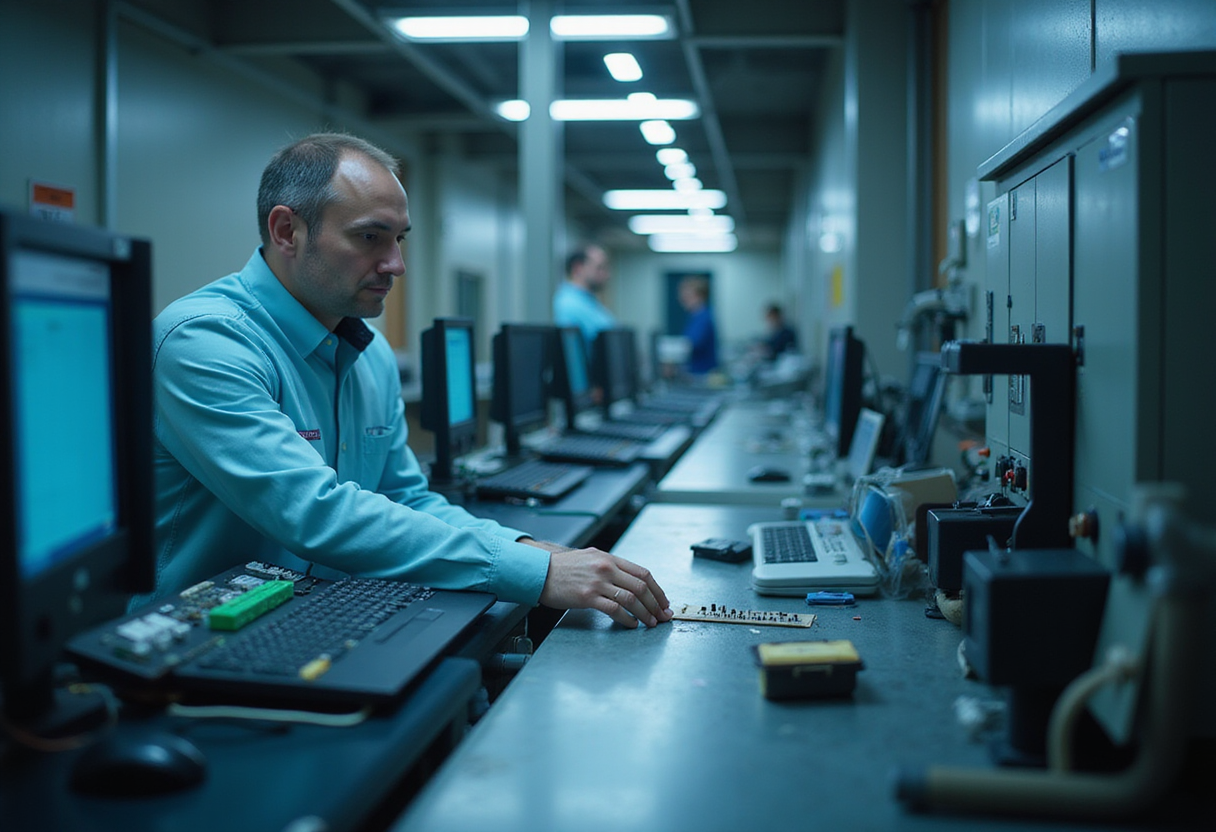
Semiconductor test equipment manufacturers are grappling with what industry sources describe as the "worst-ever" shortage of components, a squeeze that threatens delivery schedules for ATE platforms and the instruments built around them.
The report, published by TheElec, frames the situation in unusually blunt terms. Calling a supply shortfall "worst-ever" is not language the Korean electronics trade press uses lightly, and it signals that lead times and allocation decisions inside test-equipment supply chains have moved past normal cyclical tightness into territory vendors themselves consider unprecedented.
What does the shortage hit?
Test equipment occupies a peculiar position in any component crisis. A single automatic test system depends on the same classes of parts that consumer and automotive customers chase — semiconductors of every grade, passives, power devices, and board-level assemblies — but in volumes too small to command priority allocation at most suppliers. When foundries and component makers ration output, instrument builders sit near the back of the queue.
The consequence for test departments is straightforward: capex timing. Anyone with expansion plans for wafer sort, final test, or validation labs should assume equipment quotations carry delivery risk that current quoted lead times may not reflect.
Why does test equipment magnify the problem?
The instrument industry runs on long, low-volume bills of materials. Each configuration may need hundreds of distinct line items, and a single missing component — one op-amp, one FPGA, one power module — blocks final assembly of a multi-million-dollar tester. Unlike high-volume electronics, there is rarely a second-source qualification already in place, and requalifying a substituted part on a precision instrument can itself take weeks of metrology work.
That fragility explains why a component shortage translates so directly into shipment delays for test gear, even when the buyer's own fab capacity is not the constraint.
What should buyers and lab managers do now?
The practical questions fall to procurement and metrology teams:
- Treat quoted lead times on new ATE and bench instruments as optimistic until confirmed in writing against allocated stock, not booking status.
- Accelerate service contracts and spares purchases for existing platforms; a shortage that slows new builds also slows repair turnaround.
- Review calibration schedules against instrument availability, since loaner and replacement units may not be obtainable on historical timelines.
The open question
If the shortage persists, the industry faces a structural question: will test-equipment makers requalify substitute components and redesign boards at scale — adding cost and validation burden — or will instrument availability become the binding constraint on semiconductor capacity expansion itself? The answer will show up first in delivery dates, then in prices.
via Google News: Oscilloscopes and test equipment (Source)
Filed under
- semiconductor-test
- chip-shortage
- automatic-test-equipment
- supply-chain
- test-equipment
More from Grace Kim
Show full bio
Correspondent covering consumer brands and retail at Testbench Report.
67 articles
Application notes
- EU Commission Clears $86M for Semiconductor Test Equipment Site
- FPGA Lead Times Hit 52 Weeks as Component Shortfall Bites Korean Test Equipment Makers
- AI Chip Demand Drives Record Profits for Taiwan Test Equipment Makers
- Test Equipment Makers Vie for SK Hynix P&T7 Orders Up to 400 Billion Won
- Mirae Lands 10.5 Billion Won Test Equipment Order From China