TB-9295 · REV A · Technical newsheet
Test & MeasurementDevice profile
Automotive Test Equipment Market Forecast at $5.92B by 2033
The automotive test equipment market is projected to reach $5.92 billion by 2033, tied to Euro 7-class emissions regulation, EV battery and insulation testing, and ADAS calibration moving to baseline fitment on mass-market vehicles.
By Grace Kim3 min read626 words
Features
- Automotive test equipment market projected to reach $5.92 billion by 2033 per a sizing cited by AftermarketNews.
- Euro 7 emissions rules require new analyzer calibration intervals that existing Euro 6-rated benches cannot simply meet.
- ADAS calibration has shifted from premium trim to baseline equipment on many mass-market vehicles, driven by Euro NCAP scoring weight on active-safety function performance.
- Electric powertrains add high-voltage battery cycling, insulation-resistance testing, and thermal-runaway characterization to the test-equipment scope.
- Aftermarket channel — independent garages, fleet workshops, statutory inspection stations — depends on periodic-inspection regulation cadence rather than OEM R&D cycles.
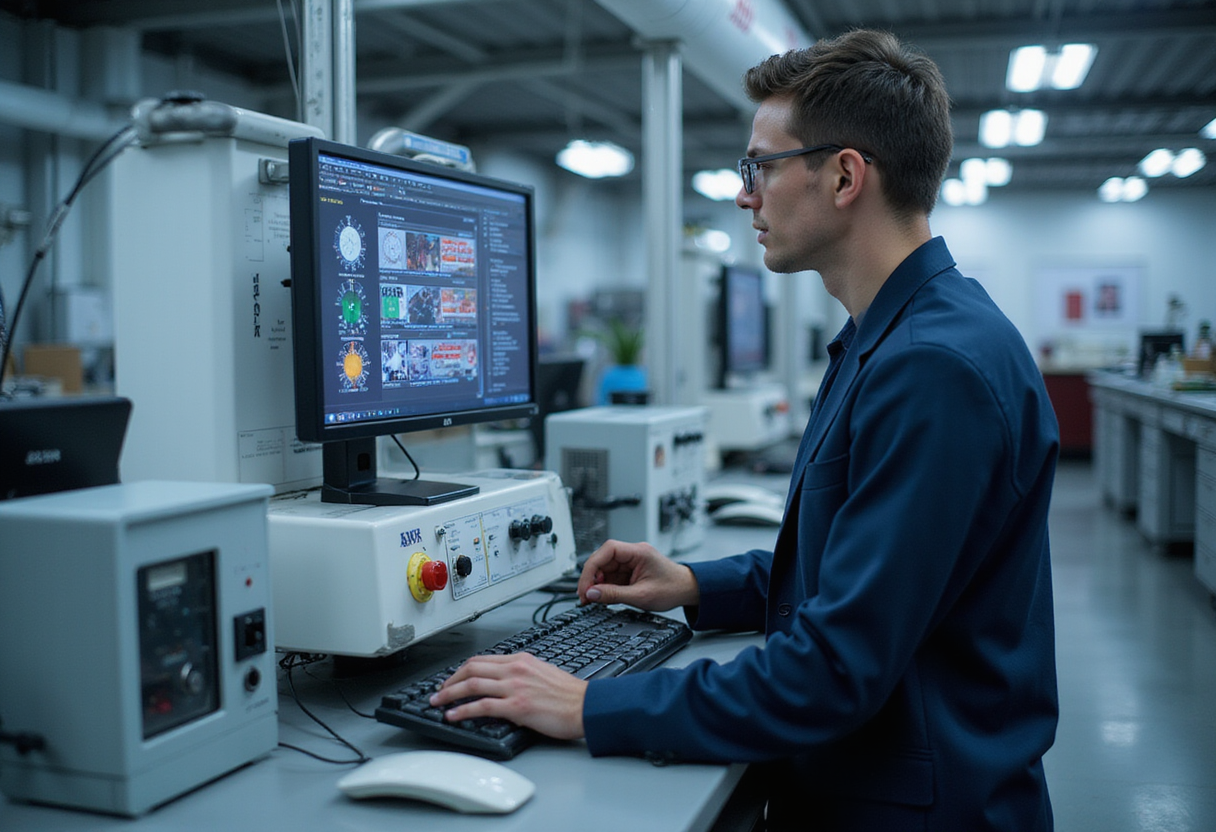
The automotive test equipment market is projected to reach $5.92 billion by 2033, according to a market sizing cited by AftermarketNews.
That single forecast frames a segment where measurement hardware, software-defined test benches, and calibration fixtures all compete for the same shrinking development window.
What does "automotive test equipment" actually cover?
The category groups several distinct measurement disciplines. Chassis dynamometers measure drivetrain output and tailpipe emissions under load. End-of-line testers verify that production vehicles meet electrical and functional specifications before shipment. Emissions analyzers quantify regulated constituents to certification limits. ADAS calibration rigs align cameras, radar, and lidar to defined vehicle coordinate frames. Battery cyclers and pack testers have expanded rapidly with electric-vehicle production.
Each discipline answers a different engineering question. All share one requirement: traceability to a published standard, whether an emissions regulation, a functional-safety norm, or an OEM-specific test plan.
What forces sit behind the projection?
Three drivers explain the figure. First, emissions and safety regulations tighten on a predictable cadence. Euro 7 in Europe, China's Stage VI, and updated EPA tiers in the United States require measurement at lower concentrations, broader drive cycles, and stricter on-board-diagnostic thresholds. Test benches built for Euro 6 cannot simply be reused; new analyzers and new calibration intervals are required.
Second, the vehicle itself has changed. Electric powertrains introduce high-voltage battery cycling, insulation-resistance testing, and thermal-runaway characterization that legacy ICE-focused equipment does not address. Hybrid architectures compound the problem by placing two energy domains on a single vehicle.
Third, ADAS content has shifted from premium trim to baseline equipment on many mass-market models. Euro NCAP and equivalent programs now score heavily on active-safety function performance, which requires repeatable, traceable calibration of perception sensors rather than the workshop-level alignment earlier service networks tolerated.
What separates vendor claims from measured performance?
A caveat worth flagging for buyers: marketing literature often quotes an "accuracy" figure without naming the standard it references. A dynamometer rated at ±0.5% of reading is meaningless without the reference load-cell class, ambient conditions, and calibration interval. Test departments should request full test conditions — temperature range, cycle time, traceability chain — before purchase.
Emissions analyzers face fewer grey areas. The regulatory framework spells most rules out: declared accuracy must hold across the certification cycle, and many jurisdictions require on-site verification before the instrument enters compliance reporting. ADAS calibration rigs, by contrast, sit under less prescription. The absence of a single dominant standard creates procurement fragmentation that often lengthens lead times.
What about the aftermarket channel?
The forecast carries implications for the independent side of the industry as well. Independent garages, fleet workshops, and statutory vehicle-inspection stations work to a different procurement calculus than OEM test cells: lower unit price, faster cycle time, longer calibration intervals, and tolerance for technician-level misuse. Volume in this channel depends on periodic-inspection regimes — emissions tests, brake efficiency, headlight aim — that tighten on a slower cadence than OEM R&D cycles.
For those buyers, software support matters as much as hardware spec. An emissions analyzer that meets today's threshold may fall out of compliance when a regulator updates the certification method. Suppliers that bundle long-term firmware maintenance and remote calibration into the unit price tend to capture the more durable aftermarket share.
Adoption question
The compliance question raised by the forecast is direct. Does the existing installed base of automotive test equipment — much of it designed for Euro 5 and Euro 6 platforms and calibrated to those reference materials — meet the measurement-uncertainty budgets that Euro 7 and its successors will impose? If not, the $5.92B figure reads less like a demand forecast and more like a forced-capex ledger.
via Google News: Oscilloscopes and test equipment (Source)
Filed under
- automotive-test-equipment
- emissions-testing
- adas-calibration
- ev-battery-testing
- metrology
More from Grace Kim
Show full bio
Correspondent covering consumer brands and retail at Testbench Report.
67 articles