TB-3193 · REV E · Technical newsheet
Machine Vision & InspectionDevice profile
SICK Launches Nova AI-Powered 3D Machine Vision for Industrial Inspection
SICK has launched Nova, an AI-powered 3D machine vision system for industrial inspection. The release does not enumerate resolution, accuracy class, sampling rate, or calibration interval, leaving AI traceability as the gating question for regulated production.
By Amara Osei3 min read530 words
Features
- SICK launched Nova, an AI-powered 3D machine vision system positioned for industrial inspection.
- The announcement cites no resolution, accuracy class, sampling rate, or calibration interval for Nova.
- Industrial 3D vision combines 2D cameras with structured-light projection, laser triangulation, time-of-flight, or stereo pairs.
- Inline deployment typically requires IP65 or IP67 housing and GigE Vision, USB3 Vision, or 10 GigE interfaces.
- Adoption in automotive, aerospace, or medical-device lines depends on AI model version control, training-data lineage, and reproducible inference.
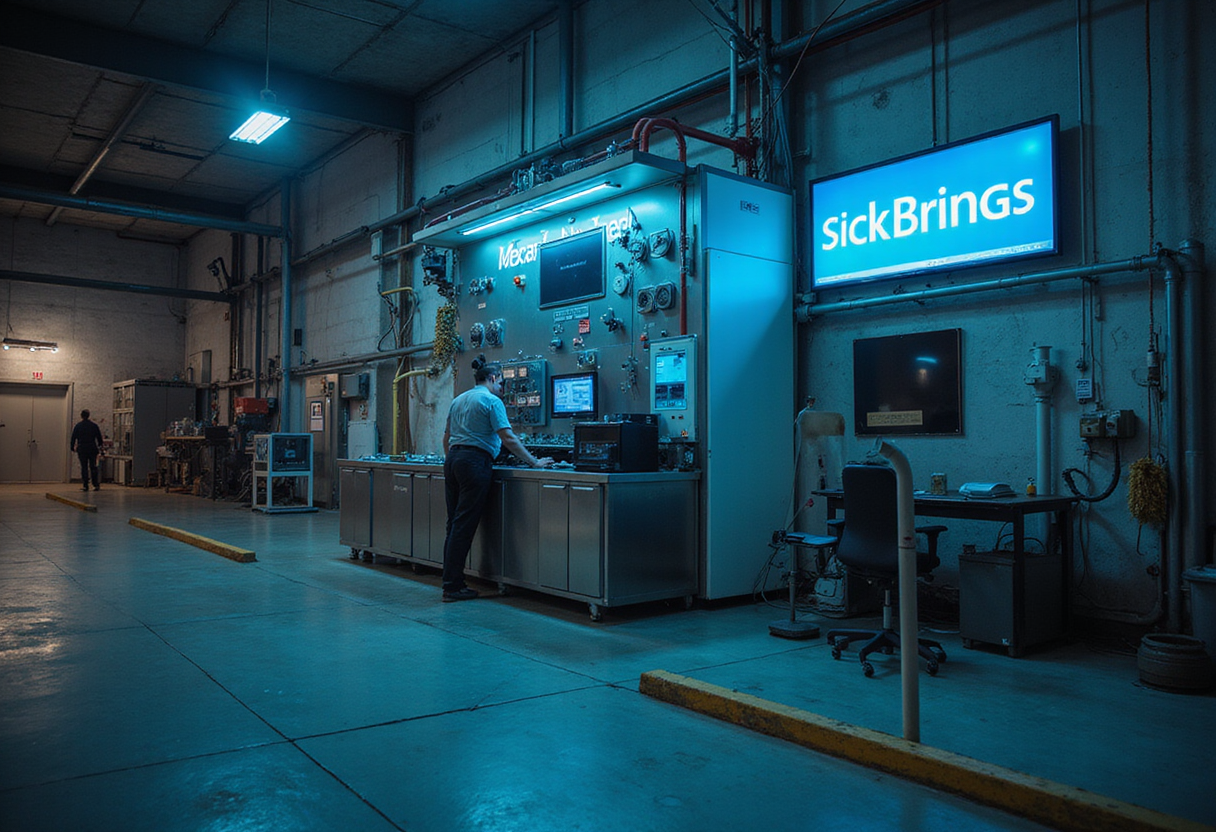
SICK has launched Nova, an AI-powered 3D machine vision system aimed at industrial inspection tasks. The product extends the German sensor manufacturer's machine-vision portfolio into AI-assisted three-dimensional imaging.
3D machine vision in industrial inspection typically combines 2D cameras with structured-light projection, laser-line triangulation, time-of-flight sensors, or stereoscopic camera pairs to produce depth maps of a target part. The classical pipeline then segments features, extracts geometric primitives, and applies hand-written pass/fail rules.
AI shifts that pipeline. A trained neural network ingests the raw depth map or a rendered point cloud and produces an inspection verdict directly. For high-mix production — small electronics, castings with variable surface finishes, medical components — the AI approach cuts the integration cost that drives most vision-cell budgets.
The release does not enumerate Nova's measurement specifications. Buyers evaluating the system for an inline cell will weigh several concrete figures before specifying it on a bill of materials.
What specs will buyers demand?
Spatial resolution in the X/Y plane, Z-axis depth accuracy expressed in micrometres or as a percentage of field height, point-cloud density per square millimetre, and frame rate at full field of view determine the defect size class the system can resolve. Working distance tolerance, housing ingress protection (typically IP65 or IP67 for factory floors), and operating temperature range decide whether the unit fits a line cell, a washdown zone, or only a metrology lab.
The interface — GigE Vision, USB3 Vision, 10 GigE, or a proprietary link — governs cabling and integration with the line PLC or industrial PC. None of these figures appear in the announcement.
What does the announcement actually specify?
The announcement names the product, the technology class, and the application area. Resolution, accuracy class, sampling rate, calibration interval, and a reference to a published standard do not appear.
SICK's existing industrial vision portfolio gives procurement engineers a baseline of configurable optics and IP-rated housings. Nova's position relative to those lines is not addressed. Distinguishing datasheet headline figures from measured performance under defined test conditions will require the full product documentation or a third-party benchmark.
What deployment questions remain?
Two practical questions follow the announcement. First, what training workflow does Nova require? A system that ships with pre-trained models for common defect classes — surface scratches, burrs, missing features, dimensional out-of-tolerance — shortens time to first good part. A system that demands user labelling and training for every new SKU shifts the burden back onto the integrator.
Second, how does the AI component integrate with line-side controllers? Vision cells increasingly communicate via OPC UA, Profinet, or EtherNet/IP; an AI inference stage that adds proprietary middleware complicates traceability and adds integration hours.
Adoption in regulated production hinges on a third question: AI traceability. Inspection decisions that feed automotive, aerospace, or medical device production increasingly require model version control, training-data lineage, and reproducible inference under documented test conditions. Nova's competitiveness in those sectors depends on whether SICK can document the AI component to the same metrological standard the company's classical vision products have met for traceability, calibration, and model version control.
via Google News: Machine vision inspection (Source)
Filed under
- machine-vision
- ai-inspection
- 3d-imaging
- industrial-inspection
- defect-detection
More from Amara Osei
Show full bio
Senior reporter covering industry trends and analytics at Testbench Report.
69 articles
Application notes
- SICK Adds AI Machine Vision Tools to Industrial Sensor Portfolio
- CLE Closes $11.9M Series A to Scale 3D Machine-Vision Platform
- Industrial Machine Vision Cameras Headed for $5.61B by 2035
- senswork to Demo AI Surface Inspection and 3D QC at IMTS 2026
- Ten Machine Vision Vendors Reshaping Factory Inspection