TB-1010 · REV F · Technical newsheet
Machine Vision & InspectionDevice profile
A3 Guide Lists Ten SWIR Camera Applications Across Three Industries
The Association for Advancing Automation has published a guide cataloging ten short-wave infrared camera applications across industrial, scientific, and machine vision categories. The primer carries no specifications, no vendor benchmarks, and no direct quotations.
By Olivia Hart3 min read515 words
Features
- A3 published the piece titled "Why Use SWIR Cameras? Top 10 Industrial, Scientific, and Machine Vision Applications" on its website.
- The article enumerates 10 applications grouped under industrial, scientific, and machine vision categories.
- The standard InGaAs SWIR detector class covers roughly 0.9 µm to 1.7 µm, extendable to 2.5 µm with cooled sensors.
- The published piece contains no measurement data, spectral plots, vendor comparisons, or direct quotations.
- A3 has not addressed calibration interval or imaging-standards traceability in the guide.
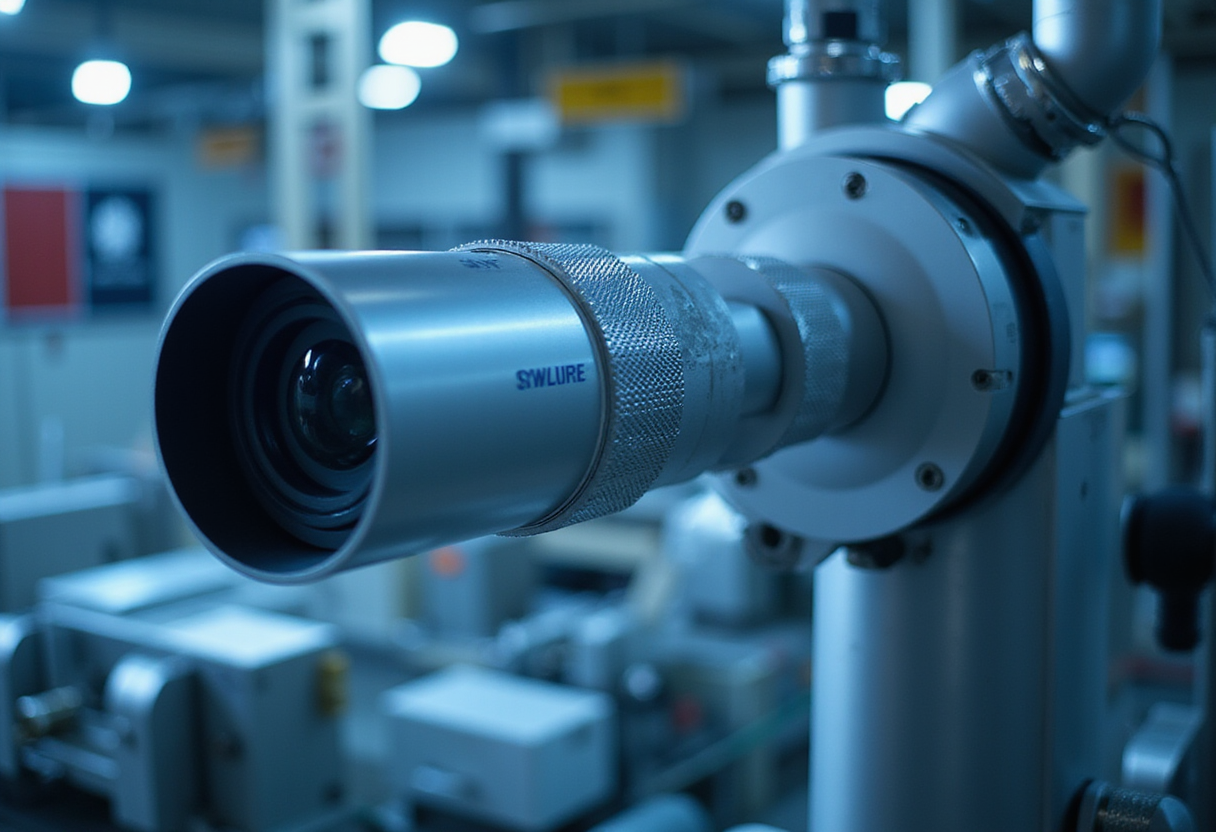
A new article on the A3 Association for Advancing Automation website catalogs ten short-wave infrared (SWIR) camera applications spread across industrial, scientific, and machine vision categories.
Titled "Why Use SWIR Cameras? Top 10 Industrial, Scientific, and Machine Vision Applications," the piece reads as a primer rather than a benchmarking study. The Association for Advancing Automation (A3) hosts it on its news channel and positions the article within an automation-education portfolio that includes standards work and the Automate Show event.
What the article actually delivers
The guide enumerates ten application entries without publishing test data, spectral plots, or measurement protocols. Each application points to a use case where a SWIR sensor produces a result a visible-light camera cannot match and a thermal (LWIR) imager handles the wrong way.
The piece makes no sourcing claim for its application list and carries no direct quotation from an engineer, vendor, or end user. Readers looking for named installations, calibrated performance numbers, or vendor side-by-sides will not find them on the page.
Why SWIR at all
Short-wave infrared occupies the spectral region roughly 0.9 µm to 1.7 µm in the standard InGaAs detector class, sometimes extended to 2.5 µm with cooled sensors or alternative materials. The band sits adjacent to visible red on the long-wavelength side and short of mid-wave thermal. The position drives two recurring advantages: many packaging polymers and silicon wafers transmit SWIR while remaining opaque to visible light, and organic compounds and water carry absorption features inside the SWIR band that do not appear in a visible-only image.
A short-wave imager therefore lends itself to inspection tasks where transmission and absorption contrasts outside the visible range reveal defects, contaminants, or material composition — the broad pattern behind the application categories A3 enumerates.
What the guide leaves to the engineer
A list of ten applications does not reduce the measurement-engineering work that follows. Choosing a SWIR camera for a specific inspection requires matching a sensor specification to an acceptance criterion: pixel pitch against minimum resolvable feature, spectral response curve against the absorption band of the analyte, dark current against integration time, and linearity against the dynamic range of the scene.
The A3 piece addresses none of those metrics explicitly. It functions as an orientation document for first-time evaluators and a scoping reference for system integrators starting new projects.
The adoption question
The publication raises a compliance and acceptance question A3 has not addressed: which calibration interval and which standard govern SWIR imaging in a regulated production line. Buyers specifying a SWIR sensor for pharmaceutical or semiconductor inspection will need to cross-reference vendor calibration certificates against the relevant ASTM or ISO imaging method before signing a purchase order, because the article does not provide that traceability information.
The guide thus behaves as a starting point rather than a decision tool. Engineers who treat it that way — using it to shortlist application candidates and returning to vendor datasheets for the actual numbers — will get what the A3 piece offers and avoid over-extending its findings.
via Google News: Machine vision inspection (Source)
Filed under
- swir-cameras
- short-wave-infrared
- machine-vision
- industrial-automation
- ingaas-sensors
More from Olivia Hart
Show full bio
Market editor covering media and advertising at Testbench Report.
63 articles
Application notes
- Specim Readies High-Speed NIR-SWIR Hyperspectral Camera for Industrial Lines
- Allied Vision Pushes Edge AI into VSWIR Spectral Band via Alecs
- Machine Vision Veterans Reflect on Three Decades of Sector Change
- VISION Award 2026 finalists named ahead of Stuttgart show
- Photonics Spectra Spring 2026 Highlights Cooling for Machine Vision Cameras