TB-4323 · REV A · Technical newsheet
Design EngineeringDevice profile
NVIDIA cuPhoton Moves Scientific Image Processing Onto GPUs
NVIDIA's open-source cuPhoton CUDA-X toolkit moves high-throughput scientific image analysis from CPU pipelines onto GPUs, keeping data resident on the accelerator.
By Grace Kim3 min read586 words
Features
- NVIDIA has released cuPhoton, an open-source CUDA-X toolkit for scientific image processing
- cuPhoton moves high-throughput image workloads from CPU-bound pipelines onto GPUs
- Target applications are optical astronomy, X-ray analysis and laser experiments
- The toolkit keeps data resident on the GPU to avoid host-transfer bottlenecks
- The announcement contains no benchmark figures; performance claims remain vendor positioning
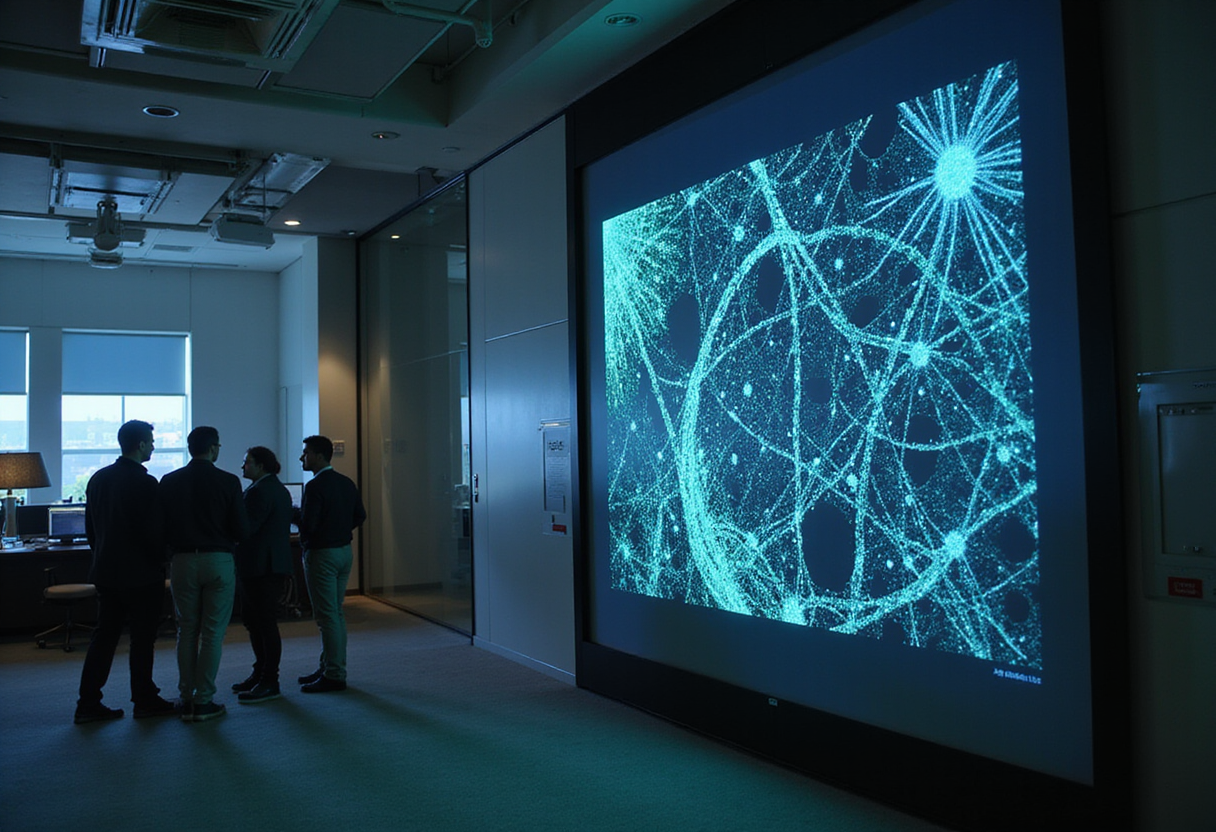
NVIDIA has released cuPhoton, an open-source CUDA-X toolkit that shifts high-throughput scientific image processing from CPU-bound pipelines onto GPUs. The software addresses a concrete bottleneck: instruments in optical astronomy, X-ray analysis and laser experiments can generate data far faster than conventional processing chains can analyse it.
The release targets a familiar pain point in instrument-lab practice. Detectors and cameras on telescopes, synchrotron beamlines and laser facilities stream image data at rates that overwhelm general-purpose CPU servers. cuPhoton keeps data on the GPU, the company states, so that processing happens where the data already resides rather than shuttling it back and forth across the host bus.
What does cuPhoton actually do?
According to NVIDIA, cuPhoton belongs to the CUDA-X family of libraries and is open source. Its scope is image analysis for photon science — the class of workloads where photons, whether visible, X-ray or laser-generated, are counted, imaged and processed into scientific results. The three application areas NVIDIA names are:
- Optical astronomy
- X-ray analysis
- Laser experiments
In each of these, the vendor's stated problem statement is identical: acquisition hardware outpaces the analysis chain. When that happens, facilities either throttle the instrument, discard frames, or invest in offline processing after the fact. cuPhoton's answer is to move the compute to the GPU and keep the pixel data there end to end.
Why GPU residency matters
The physics of the bottleneck is architectural rather than algorithmic. A modern scientific camera can push gigapixel-scale streams per second through its readout electronics. Moving those pixels into CPU memory over PCIe introduces both latency and bandwidth ceilings that GPUs do not face when data stays resident on the accelerator card. Keeping the pipeline on the GPU removes the host-transfer step — historically the slowest link in real-time image-analysis chains at light sources and observatories.
NVIDIA frames cuPhoton as part of its CUDA-X stack, which wraps GPU-accelerated libraries for domain-specific compute. Open-source licensing means labs can inspect, modify and extend the code rather than treat it as a black-box binary — a practical consideration for facilities with custom detectors and non-standard data formats.
Measured claims versus positioning
The release announcement itself does not publish benchmark figures, throughput numbers or comparison timings against CPU baselines. NVIDIA's claims — that instruments generate data faster than conventional chains can process, and that cuPhoton keeps data on the GPU to close that gap — are vendor positioning until independent facilities publish their own measurements. Test conditions, detector types and image sizes will determine real-world gains, and no such parameters appear in the announcement. Buyers evaluating the toolkit should request or run benchmarks on their own data streams before committing a processing architecture to it.
Who should evaluate it now?
The natural early adopters are research groups already operating CUDA-capable hardware: observatories processing optical survey frames, beamline scientists handling X-ray image streams, and laser-lab teams running high-repetition-rate experiments. For these users, an open-source GPU image-processing library with vendor backing reduces the engineering cost of building acceleration from scratch.
The open question cuPhoton raises is one of adoption, not capability. Will the photon-science community — traditionally reliant on bespoke, facility-written analysis code — standardise on a vendor-originated CUDA-X library, and will independent benchmarks confirm the throughput advantage NVIDIA implies? Until facility results appear, cuPhoton is a promising engineering offer with its performance case still to be demonstrated in public.
via github.com (Original)
Filed under
- nvidia
- cuda
- image-processing
- gpu
- photon-science
More from Grace Kim
Show full bio
Correspondent covering consumer brands and retail at Testbench Report.
67 articles
Application notes
- Cognex Bolts Nvidia Jetson Onto the In-Sight 6900 for Edge AI Inspection
- Tektronix DPO oscilloscope ships Nvidia T1000 GPU and 12-core EPYC
- Tektronix DPO Oscilloscope Carries EPYC CPU, T1000 GPU, 96GB RAM
- Cognex Brings Nvidia Jetson Compute Into Its Machine Vision Line
- Allied Vision's HR 100GigE Cameras Reach 104.9 MP at 225 fps