TB-4221 · REV A · Technical newsheet
Lab InstrumentationDevice profile
Kyrgyzstan Opens 80.3 Million Som Tender for SOC Laboratory Equipment
Kyrgyzstan's 80.3 million-som tender for 'SOC' laboratory equipment names no contract authority, no bid deadline, and no standards reference. Three instrument classes share the label.
By Sophie Lindqvist3 min read593 words
Features
- Contract value: 80.3 million soms
- Tender title: SOC laboratory equipment — instrument class not specified
- Procurement notice carried by AKIpress News Agency
- Notice omits contracting authority, bid deadline, technical annex, and reference standards
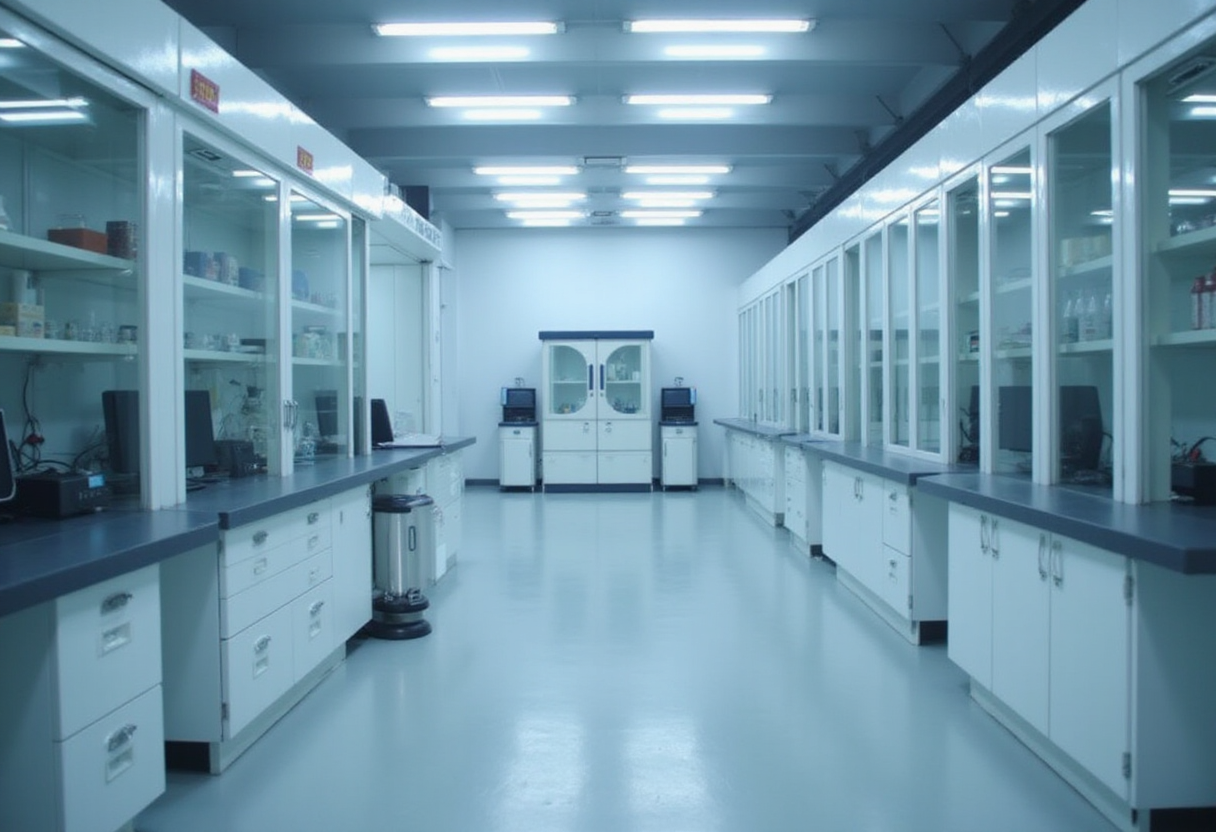
Kyrgyzstan has opened a procurement for laboratory equipment designated "SOC" with a combined contract value of 80.3 million soms, according to the announcement carried by AKIpress News Agency.
The tender value stands as the only quantified fact in the public notice. The release identifies neither the procuring ministry nor the receiving laboratory, sets no bid closing date, and attaches no technical schedule or standards reference. For a procurement of this size, the absence of an annex is itself a specification — it tells bidders that the contracting authority has not yet committed to an instrument class.
What does the "SOC" label cover?
In a test and measurement setting, "SOC" is not a single instrument family. Three candidates dominate public-procurement dictionaries:
- Soil Organic Carbon analyzers — combustion or wet-chemistry systems used in agricultural and environmental laboratories. Combustion CN analyzers are the default in Central Asian soil reference labs.
- State-of-Charge test systems — battery cyclers, climate chambers, and data acquisition used in cell qualification for EV and stationary storage programs.
- System-on-Chip — a semiconductor class, not a bench instrument, and therefore unlikely in this context.
Without a clarifying annex, soil testing remains the most common reading in Central Asian agricultural procurement. Battery-cycling installations of this scale are more typical of automotive or grid-storage programs than of mid-tier state tenders.
What 80.3 million soms typically buys
The envelope covers a single floor-standing dry-combustion analyzer with an integrated sample feeder, or a multi-station benchtop fleet covering TOC, total nitrogen, and total carbon. Battery-grade State-of-Charge test capacity in the same budget would procure a 50- to 200-channel cycler bank with a single climate chamber — adequate for 18650/21700 cell formation but short of full pack-level qualification.
The instrument class changes every other buying parameter. Combustion analyzers require ISO 10694 or ASTM D2974 compliance, a sub-0.01% carbon detection floor, and 5-to-10-year calibration intervals tied to a national reference material. Battery cyclers need IEC 62660 or UN 38.3 traceability, ±0.05% current accuracy, and channel-to-channel isolation verification every six months.
What the announcement does not specify
The AKIpress-carried notice omits:
- The contracting authority and end-user laboratory
- The bid submission window and any pre-bid meeting
- Qualification requirements for bidders
- Installation, commissioning, and training scope
- Warranty, calibration, and post-warranty service terms
- Reference standards the equipment must satisfy
A tender that names a budget ceiling without naming a standard leaves bidders guessing. Instrument accuracy class, sample throughput, and method compliance — not headline price — determine whether a 5-million-som bench unit or a 30-million-som floor-standing system matches the requirement.
What a bidder should request
Potential bidders should ask the contracting authority for the technical specification annex before preparing an offer. The label "SOC" alone is not enough to commit on instrument class, sample-throughput target, or calibration interval. A clarifying question on which "SOC" instrument family the authority intends, plus the cited national or international standard, would let vendors size their quotes against actual requirements.
The procurement also raises the adoption question common to Central Asian laboratory modernization: whether equipment bought under a single tender will be backed by a multi-year service agreement, a consumable supply contract, and a metrology trace path to the Kyrgyz National Institute of Metrology. Without that downstream layer, instrument accuracy class on day one is no guarantee of measurement integrity five years later. The tender price is set; the metrology support contract still has to be written.
via Google News: Laboratory equipment (Source)
Filed under
- laboratory-equipment
- procurement-tender
- calibration-standards
- kyrgyzstan
- test-instrumentation
More from Sophie Lindqvist
Show full bio
News editor covering marketplaces and e-commerce at Testbench Report.
66 articles
Application notes
- Zambia Expands ZABS Laboratory Testing Capacity with New Equipment
- UNDP and Sri Lanka's Environment Ministry Deliver Lab Equipment for Chemicals Management
- Test Equipment Makers Call Chip Shortage 'Worst-Ever'
- Ghana FDA Takes Delivery of Two Lab Instruments Under UNIDO Programme
- Lab Equipment Services Head to $35.4B by 2030