TB-4185 · REV A · Technical newsheet
Test & MeasurementDevice profile
JEDEC JESD264 delivers first industry-wide silicon photonics reliability standard
JEDEC has published JESD264, the first industry-wide standard for silicon photonics qualification and reliability, announced in October 2026 to enable broader adoption.
By Grace Kim2 min read397 words
Features
- JEDEC officially announced the JESD264 standard for silicon photonics in October 2026.
- JESD264 targets qualification and reliability requirements for SiPh technology.
- JEDEC describes JESD264 as the first industry-wide standard for silicon photonics.
- The standard is positioned as the foundation for broader silicon photonics adoption.
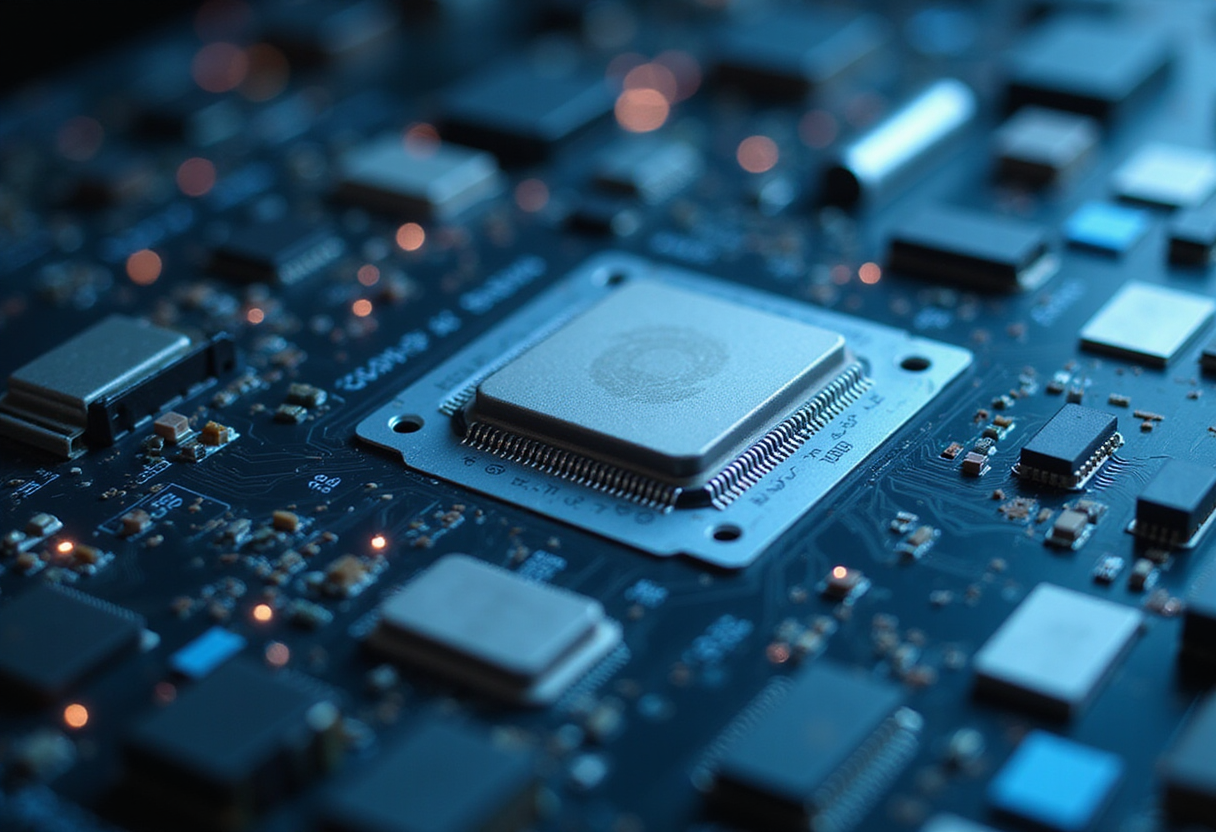
JEDEC has published JESD264, a standard it describes as the first industry-wide specification for silicon photonics (SiPh) qualification and reliability. The announcement, dated October 2026, closes a gap that has so far forced photonics vendors and their customers to negotiate reliability expectations part by part.
The standard addresses qualification and reliability requirements specifically. JEDEC frames it as the foundation for broader silicon photonics adoption across the industry — a market that has grown largely on vertically integrated, single-vendor supply arrangements.
Why does a reliability standard matter for photonics?
Silicon photonics integrates optical components — modulators, waveguides, photodetectors — on the same silicon substrate as, or adjacent to, CMOS electronics. The physics that make SiPh attractive also complicate qualification. Optical interfaces degrade through mechanisms electronic test flows were never written to catch: fiber-attach fatigue, coupling alignment drift, photo-induced degradation in waveguide material, and thermal cycling of heterogeneous material stacks with mismatched expansion coefficients.
Until now, no industry-wide standard has governed how vendors qualify against these failure modes. Each co-packaged optics or optical I/O supplier defined its own stress screens and mission-profile assumptions, and each hyperscaler or systems house audited them independently. A common JEDEC baseline replaces that bilateral negotiation with a reference both sides can cite in procurement.
What changes for buyers and suppliers?
For test and measurement engineers, the practical consequence is a shared vocabulary. Qualification requirements written into JESD264 give reliability labs a defined target for:
- Stress-condition selection for SiPh-specific failure mechanisms
- Acceptance criteria for optical performance drift over lifetime
- Documentation that procurement teams can compare across vendors
That comparability is the point JEDEC itself makes in describing JESD264 as the first industry-wide standard for the technology. JEDEC has not yet published detailed clause-level contents in the announcement; engineers specifying the standard should treat the full document, not the press release, as the procurement reference.
Does JESD264 change buying decisions?
The development raises one clear adoption question: will second-source photonics suppliers — the companies a standard like this exists to enable — qualify against JESD264 quickly enough for large buyers to move away from single-vendor optics supply? The standard's existence makes multi-vendor sourcing contractually simpler. Whether procurement teams now write JESD264 compliance into optical component specifications, and on what timeline, will determine whether the October 2026 publication becomes a market inflection or a reference document.
via Electronics Weekly (Source)
Filed under
- jedec
- jesd264
- silicon-photonics
- reliability-qualification
- photonics-standards
More from Grace Kim
Show full bio
Correspondent covering consumer brands and retail at Testbench Report.
67 articles
Application notes
- NIST Bonds Photonic Chips to Fiber Without Glue for Extreme Environments
- Renishaw Posts Record FY2026 Revenue on Semiconductor, Aerospace Demand
- Teradyne Acquires TestInsight to Broaden Automated Test Equipment Line
- Machine Vision Veterans Reflect on Three Decades of Sector Change
- Mitutoyo Opens Semiconductor Competence Center in Dresden