TB-3579 · REV C · Technical newsheet
Machine Vision & InspectionDevice profile
Vision Systems Take Over Inspection of EV Components
Assembly Magazine reports that machine vision systems are now automating inspection of electric-vehicle components on production lines, replacing manual checks.
By Grace Kim1 min read273 words
Features
- Assembly Magazine reports vision systems now automate inspection of EV components
- Automated optical inspection replaces manual checks on EV production lines
- No detection rates, cycle times, or test conditions were published with the report
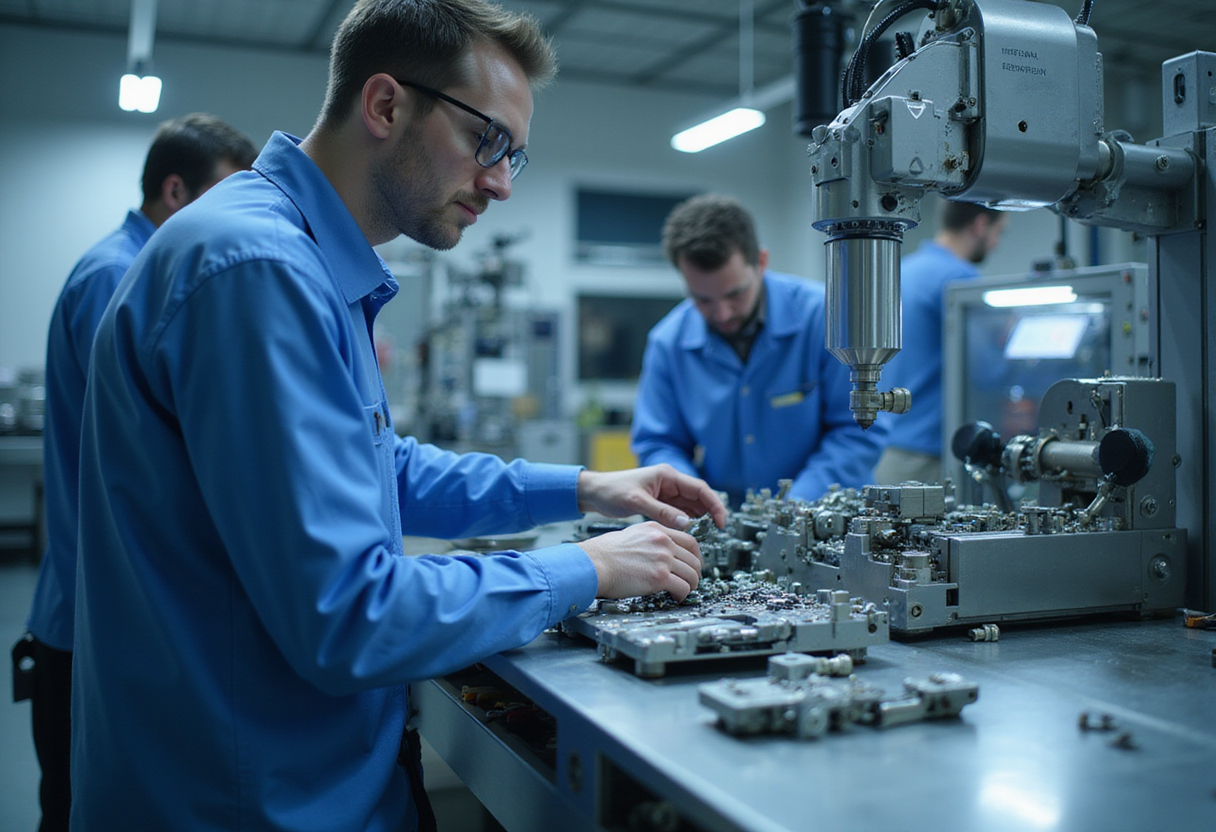
Machine vision systems are now automating the inspection of electric-vehicle components, according to a report published by Assembly Magazine.
The report's headline finding is straightforward: manufacturers are deploying vision-based inspection on EV production lines in place of manual checks. The publication did not release detailed specifications — resolution, cycle time, or defect-detection rates — alongside the headline, so buyers should treat performance claims as unverified until vendors publish test conditions.
Why does automated vision fit EV manufacturing?
EV components place unusual demands on quality control. High-volume battery modules, power electronics, and electric-drive assemblies combine tight mechanical tolerances with electrical safety requirements, and a single escaped defect can force a costly recall. Vision systems address this by inspecting every unit at line speed rather than sampling, which manual inspection cannot match at EV production volumes.
The underlying method is well established in general assembly, and its extension to EV-specific components follows the sector's scale-up. What the Assembly Magazine report signals is adoption: vision inspection is moving from optional add-on to standard practice on EV lines.
What should buyers verify?
Because the report carries no measured performance data, engineers evaluating such systems should ask vendors for:
- Defect-detection rates and false-reject rates under stated lighting and part-fixturing conditions
- Inspection cycle time relative to line takt time
- Calibration and revalidation intervals for optics and lighting
The open question the report raises is compliance: as vision inspection becomes the default on EV lines, will OEM audit schemes and quality standards begin to specify machine-vision verification explicitly rather than accepting it as an equivalent to manual inspection?
via Google News: Machine vision inspection (Source)
Filed under
- machine-vision
- electric-vehicles
- automated-inspection
- quality-control
More from Grace Kim
Show full bio
Correspondent covering consumer brands and retail at Testbench Report.
67 articles
Application notes
- AI-Driven Machine Vision Moves Into EV Battery Quality Control
- Industrial Machine Vision Cameras Headed for $5.61B by 2035
- Visual Reasoning Moves Machine Vision Beyond Binary Pass/Fail
- Machine Vision Veterans Reflect on Three Decades of Sector Change
- Machine Vision Moves From Defect Detection to Autonomous Control