TB-3699 · REV E · Technical newsheet
Machine Vision & InspectionDevice profile
Union Pacific Applies AI to Track Inspection
Union Pacific confirms it is applying artificial intelligence to track inspection, extending machine-learning defect detection across its US freight network.
By Amara Osei3 min read612 words
Features
- Union Pacific has publicly confirmed it is using AI to enhance track inspection
- The announcement did not include detection accuracy, deployment counts, or validation data
- Union Pacific's network spans 23 US states in the western two-thirds of the country
- US track inspection practice is governed by FRA Track Safety Standards, 49 CFR Part 213
- No FRA waiver or approval tied to this AI deployment has been disclosed
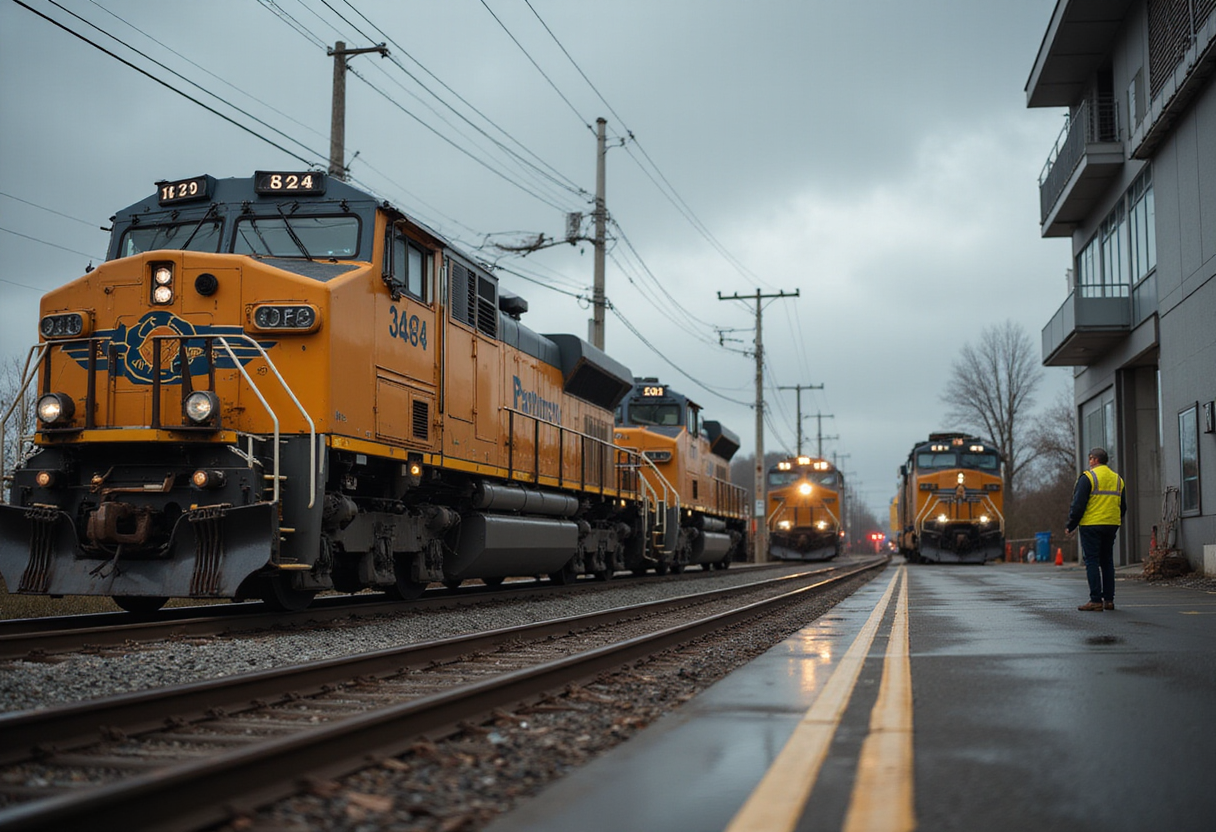
Union Pacific has confirmed it is applying artificial intelligence to enhance how it inspects track, marking a further step in the US Class I railroad industry's shift from purely manual, schedule-based inspection toward instrumented, data-driven condition monitoring.
The company disclosed the development under the headline "AI is Enhancing How Union Pacific Inspects Track." The announcement itself is brief, and the railroad has not yet published the accompanying technical detail — no accuracy figures, detection rates, or deployment counts were included in the initial release. What it does confirm is direction: AI now sits in the inspection loop at one of the largest freight networks in North America.
Why does AI-assisted inspection matter for rail?
Track inspection has traditionally combined walking inspections by qualified inspectors with track geometry cars that measure parameters such as gauge, crosslevel, alignment, and profile under load. Defect-driven derailments remain a principal safety concern for regulators, and the Federal Railroad Administration (FRA) has for years weighed how automated inspection technologies can supplement human inspectors at permitted higher-frequency, vehicle-mounted intervals.
Machine-learning systems change the economics of that model. Instead of an inspector reviewing images or geometry traces after the fact, an AI classifier flags suspected defects — broken rails, split rails, surface cracking, fastener loss — at the point of capture, either from hi-rail vehicles equipped with cameras or from wayside or locomotive-mounted sensing. The classifier's output still routes to a human inspector for confirmation in current practice, preserving the compliance chain while compressing the time between defect occurrence and detection.
For a network the size of Union Pacific's — which spans 23 states across the western two-thirds of the United States — even marginal gains in detection latency translate into thousands of potential defects surfaced earlier across the system each year.
What is known — and what is not
The announcement confirms the application of AI to track inspection but stops short of datasheet-level specifics. Union Pacific has not stated in this release:
- Which inspection platforms host the AI (hi-rail vehicles, geometry cars, wayside installations, or drone imagery)
- Detection accuracy, false-positive rates, or benchmark results against human inspection
- The number of route-miles covered or inspection frequency achieved with AI assistance
- Whether the FRA has granted any waiver or approval tied to the AI-assisted process
Readers evaluating the development should hold those categories of claim separate. A railroad's confirmation that AI "enhances" inspection is an adoption statement, not a measured performance figure. The metrology question — how the system's detection performance was validated, over how many confirmed defects, and under what track and lighting conditions — remains open until Union Pacific publishes technical detail or a regulatory filing.
The regulatory dimension
In the US, track inspection practice is governed by FRA Track Safety Standards (49 CFR Part 213), which prescribe inspection frequencies and methods by class of track. Any move toward AI-primary inspection — as opposed to AI-assisted flagging ahead of human confirmation — would engage the FRA's waiver and approval processes. Railroads including Union Pacific have previously participated in automated track inspection programmes under FRA oversight, so the compliance pathway exists; the open question is whether this AI deployment stays in the assistive tier or seeks a formal role in satisfying inspection mandates.
The adoption question
Union Pacific's disclosure signals that AI-based defect detection has moved from pilot territory into the public positioning of a major freight operator. The question for the industry now is verification: will Union Pacific — and the FRA — publish the validation data that lets inspectors, regulators, and competing railroads judge whether the AI genuinely improves detection, and by how much?
via Google News: Machine vision inspection (Source)
Filed under
- track-inspection
- machine-learning
- defect-detection
- railroad-safety
- computer-vision
More from Amara Osei
Show full bio
Senior reporter covering industry trends and analytics at Testbench Report.
69 articles
Application notes
- Trackside Sensors Feed Control Room Decisions in Rail Monitoring Push
- SICK Adds AI Machine Vision Tools to Industrial Sensor Portfolio
- Cognex Adds AI-Powered In-Sight 3900 to Industrial Vision Lineup
- Machine Vision Moves From Defect Detection to Autonomous Control
- IMTS 2026 reframes machine vision for manufacturing