TB-7725 · REV E · Technical newsheet
Industrial IoT & MonitoringDevice profile
Pumps & Systems Examines Artificial Intelligence in Condition Monitoring
Pumps & Systems has published an article titled "Artificial Intelligence in Condition Monitoring" addressing machine learning for pump health assessment; the syndicated headline offers no figures.
By Nathan Brooks2 min read349 words
Features
- Pumps & Systems published an article titled "Artificial Intelligence in Condition Monitoring."
- The headline was distributed via the publication's Google News feed.
- No performance figures, vendor names or case-study data accompanied the syndicated headline.
- Conventional pump condition monitoring rests on ISO 10816 and successor ISO 20816 vibration severity zones.
- The article text could not be independently verified at the time of this report.
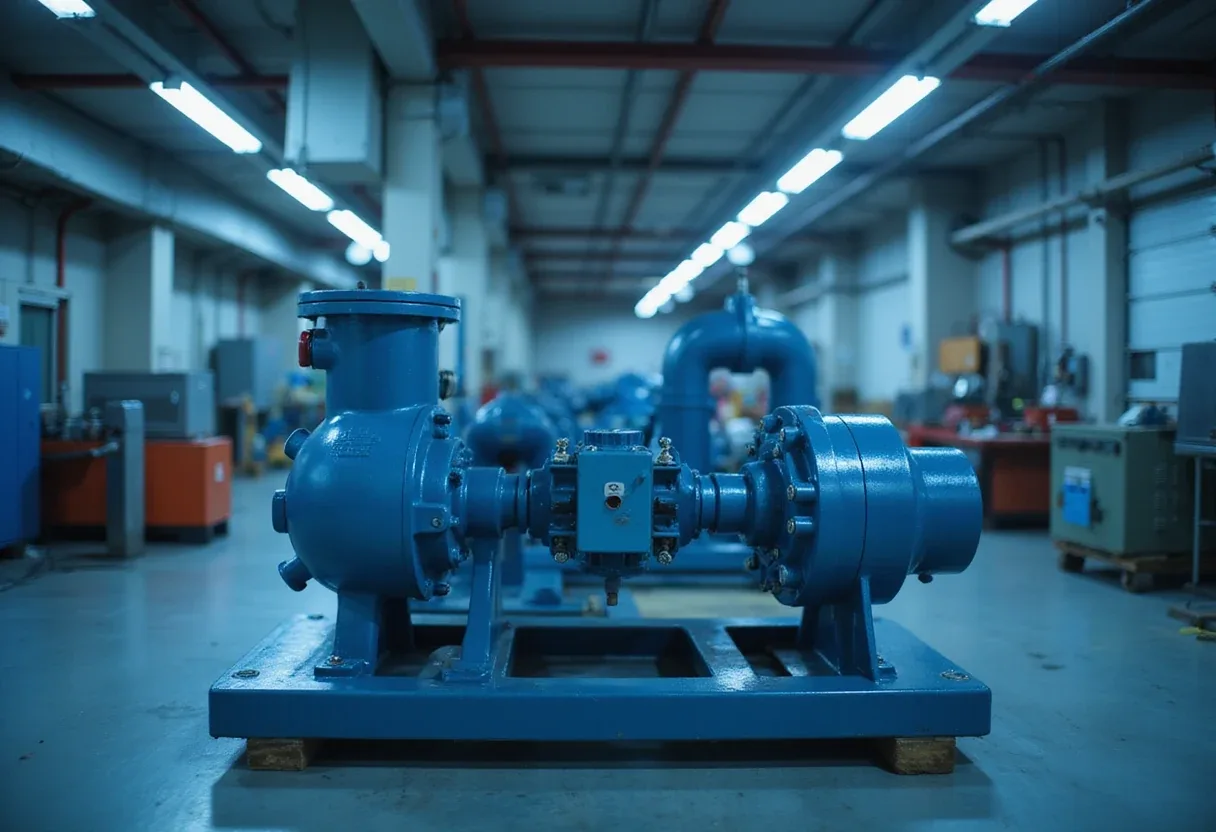
Pumps & Systems, the trade publication serving the pump and rotating-equipment sector, has published an article under the headline "Artificial Intelligence in Condition Monitoring." The piece addresses the use of machine-learning methods in programs that track the health of pumps and related machinery through vibration, temperature and process data.
The syndicated headline circulated through Google News on the publication's feed. The article text itself did not accompany the feed item, so the specific claims, case studies and figures in the piece could not be independently verified at the time of this report.
Why the topic matters now
Condition monitoring for pumps conventionally relies on vibration analysis performed to ISO 10816 and its successor ISO 20816, which define measurement positions, frequency ranges and severity zones for rotating machinery. Threshold-based alarms drawn from those standards remain the default in most plants.
Machine-learning approaches change that decision structure. Instead of fixed limits, a model trained on baseline operating data flags deviations that precede measurable bearing damage, cavitation or misalignment. The open question for any buyer is whether the training data covers the actual duty points, fluid properties and speed ranges of the installed fleet — a model validated on clean baseline data can produce false alarms on variable-speed drives.
What remains unverified
Because only the headline reached this desk, several facts a metrology-minded reader would demand are unavailable:
- Whether the article reports measured detection performance — false-positive rates, lead time before failure — or vendor claims.
- Which sensor classes and sampling rates the discussed systems use.
- Whether any plant operators are named with deployment dates and outcomes.
- Whether the piece distinguishes between anomaly detection, which needs no failure labels, and diagnostic classification, which does.
Readers should treat any third-party summaries of the article with that gap in mind.
The adoption question
AI-based condition monitoring succeeds or fails on traceability: can the system show, from raw sensor data to alarm, why it flagged a machine? Plants that answer yes will fold these tools into ISO 20816 programs. Plants that cannot will keep the thresholds.
By Nathan Brooks
via Google News: Condition monitoring (Source)
Filed under
- condition-monitoring
- vibration-analysis
- artificial-intelligence
- predictive-maintenance
- iso-20816
More from Nathan Brooks
Show full bio
Staff writer covering people, launches and day-to-day practice in Instruments, test and measurement at Testbench Report.
60 articles
Application notes
- Wireless Vibration Sensors and Machine Learning Reshape Pump Health Monitoring
- Wireless Condition Monitoring Targets Thrust Bearing Clearance
- Pre-failure AI model targets industrial rotating equipment
- Nature publishes rotating-machine condition-monitoring dataset for benchmarking
- ZF Brings Condition Monitoring to SMM 2026 Marine Show