TB-7422 · REV B · Technical newsheet
Sensors & InstrumentationDevice profile
Nature paper reframes gas turbine control valve monitoring around thermodynamics
A Nature paper proposes thermodynamic-based condition monitoring for control valves in gas turbines under thermal fluctuations, replacing vibration diagnostics with energy-balance computation from existing DCS measurements on flexible-duty plants.
By Olivia Hart3 min read624 words
Features
- Paper 'Advancing sustainable thermal power plants: A thermodynamic-based condition monitoring model for control valves in gas turbines under thermal fluctuations' published in Nature
- Method reframes valve health assessment around first-principles energy balances computed across the valve, replacing vibration and acoustic monitoring
- Targets flexible-duty thermal plants where thermal transients from peaking and renewable-firm cycling defeat steady-state valve models
- Computed quantities include discharge coefficient, effective flow area, and leakage against an isentropic reference derived from upstream and downstream measurements
- Methodology aligns with ISO 3977-3 and ASME PTC 22/46 frameworks for gas turbine instrumentation and performance testing
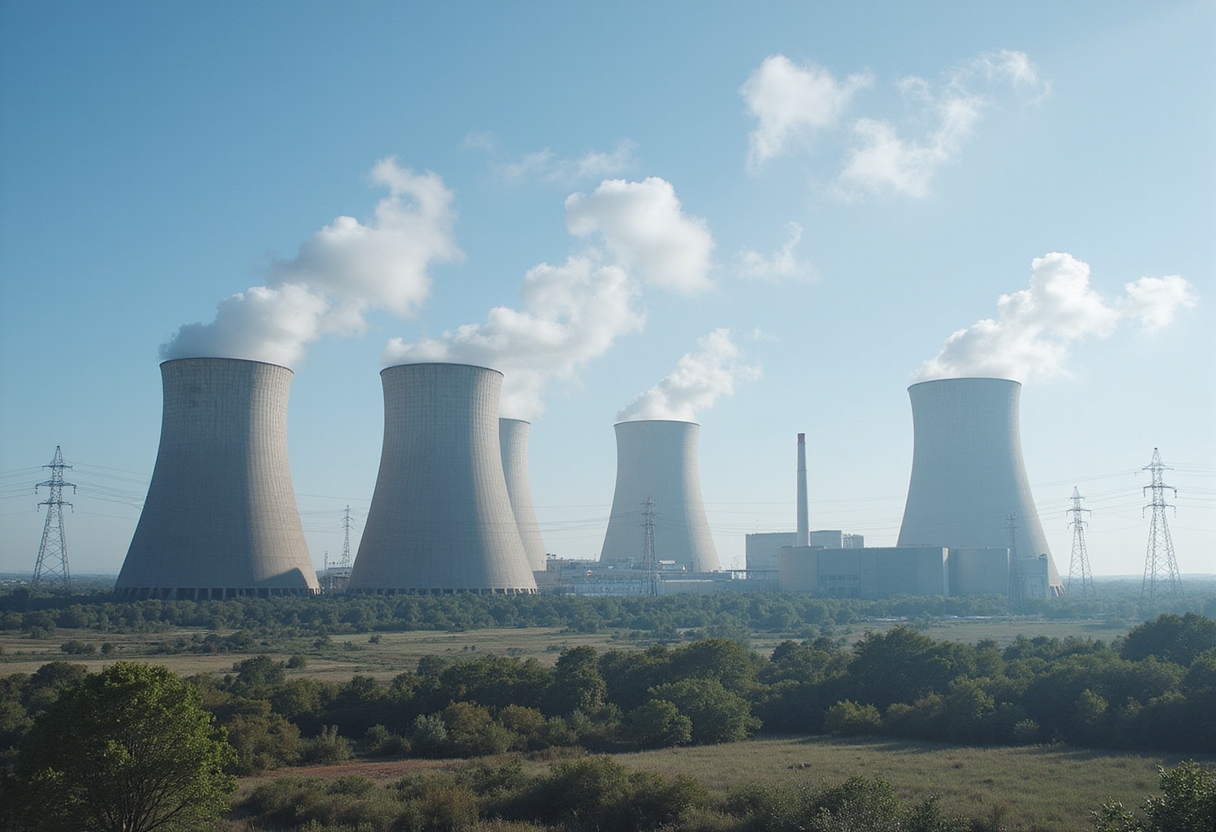
A paper published in Nature proposes a thermodynamic-based condition monitoring framework for control valves operating inside gas turbines subject to thermal fluctuations, with explicit application to sustainable thermal power generation. The work, titled "Advancing sustainable thermal power plants: A thermodynamic-based condition monitoring model for control valves in gas turbines under thermal fluctuations," shifts valve health assessment from vibration and acoustic signatures to first-principles energy balances computed across the valve itself.
Why control valves matter in a gas turbine
Control valves regulate fuel, steam extraction, and bypass flows in gas turbines. Their trim and seat surfaces operate at several hundred degrees Celsius, with cyclic thermal loading every start-stop event. A loss of valve authority of one percent can shift turbine heat rate by a measurable amount and reduce dispatchable output. Traditional condition monitoring relies on installed vibration probes, acoustic emission sensors, and periodic borescope inspection. The thermodynamic approach tracks the valve's effective flow area, discharge coefficient, and leakage against an isentropic reference computed from upstream and downstream measurements. Trim wear, seat erosion, and actuator stiction then surface as deviations from that reference.
What the thermal fluctuation angle changes
The thermal fluctuation angle is the practical one. Gas turbines on peaking duty, or running in firm-renewable cycling, see rapid load changes that move the valve's operating point across its characterised map within minutes. Steady-state models lose accuracy in those transients. A thermodynamic-based scheme tied to instantaneous turbine inlet temperature, exhaust gas temperature, and shaft speed can update its baseline continuously and follow the valve rather than the laboratory curve.
What "thermodynamic-based" means in practice
The methodology treats the valve as a throttling device and solves the steady-flow energy equation across it, using measured pressures and temperatures as boundary conditions. From that, discharge coefficient, effective area, and leakage derive at every scan. Bench-calibrated curves are replaced or augmented by in-situ computation. The underlying physics is well known; the contribution appears to be the explicit treatment of thermal-fluctuation-induced changes in fluid properties and the resulting drift of the diagnostic baseline.
Why this targets thermal power sustainability
Gas turbines provide the dispatchable power that complements variable renewables. Their flexibility stresses every mechanical component, including control valves. A monitoring system that keeps accuracy across fast thermal transients supports the duty cycle that grid operators now ask these machines to perform. That is the sustainability case the paper frames.
Which standards the work touches
ISO 3977-3 governs gas turbine procurement and acceptance, including control and instrumentation. ASME PTC 22 and PTC 46 cover gas turbine performance testing, where uncertainty in valve flow capacity feeds the plant heat-rate number directly. A thermodynamic-based condition monitoring model that quantifies valve degradation in thermodynamic units can fold into existing performance-test frameworks without requiring additional sensor classes.
Where the buy hinges
The appeal for plant operators is the sensor stack already in place: thermocouples, pressure transmitters, and flow elements sit on every modern gas turbine. No new intrusive probe has to survive the hot gas path. The diagnostic runs on data the DCS already logs. For OEMs, the same model supplies a digital thread linking valve wear to component life and warranty exposure.
Adoption question
Adoption will track multi-site validation. The shift from vibration diagnostics to thermodynamic diagnostics requires trust in the model, calibration history, and a track record against bench tear-down data. Until operators outside the originating lab run the scheme against measured forced outages and quantified heat-rate penalties, the paper remains a probability demonstration rather than a fleet offer. The open question for 2026 plant budgets is whether thermodynamic monitoring earns a line item alongside vibration analytics, or stays a research footnote.
via Google News: Condition monitoring (Source)
Filed under
- condition-monitoring
- gas-turbines
- control-valves
- thermodynamics
- predictive-maintenance
More from Olivia Hart
Show full bio
Market editor covering media and advertising at Testbench Report.
63 articles
Application notes
- Hydropower operators turn to advanced condition monitoring for reliability
- STMicroelectronics brings vibration sensor to industrial monitoring
- Condition monitoring deal puts Welsh Water pump assets under watch
- Condition Monitoring Saves Six Hours of Downtime, 288,000 Bottles
- Nature publishes rotating-machine condition-monitoring dataset for benchmarking