TB-9984 · REV B · Technical newsheet
Machine Vision & InspectionDevice profile
Industrial IoT Cameras Demand Sensor Rework for the AI Era
An iotforall.com analysis argues that industrial IoT cameras built a decade ago for human dashboards no longer fit the AI era, where neural networks consume raw sensor data on-device.
By Amara Osei3 min read579 words
Features
- iotforall.com published an analysis titled "Why Your Industrial IoT Camera Needs a Redesign for the AI Era"
- Modern AI vision models typically benefit from 10–12 bit per channel data, beyond the 8-bit display pipeline
- MIPI-CSI2 and GigE Vision dominated the 2015–2020 generation of industrial cameras
- EMVA 1288 is the reference standard for reporting quantum efficiency, temporal dark noise, and saturation capacity in machine-vision sensors
- Factory-floor camera installations are typically qualified under ISO 13849 or IEC 61508, both of which assume deterministic data flow
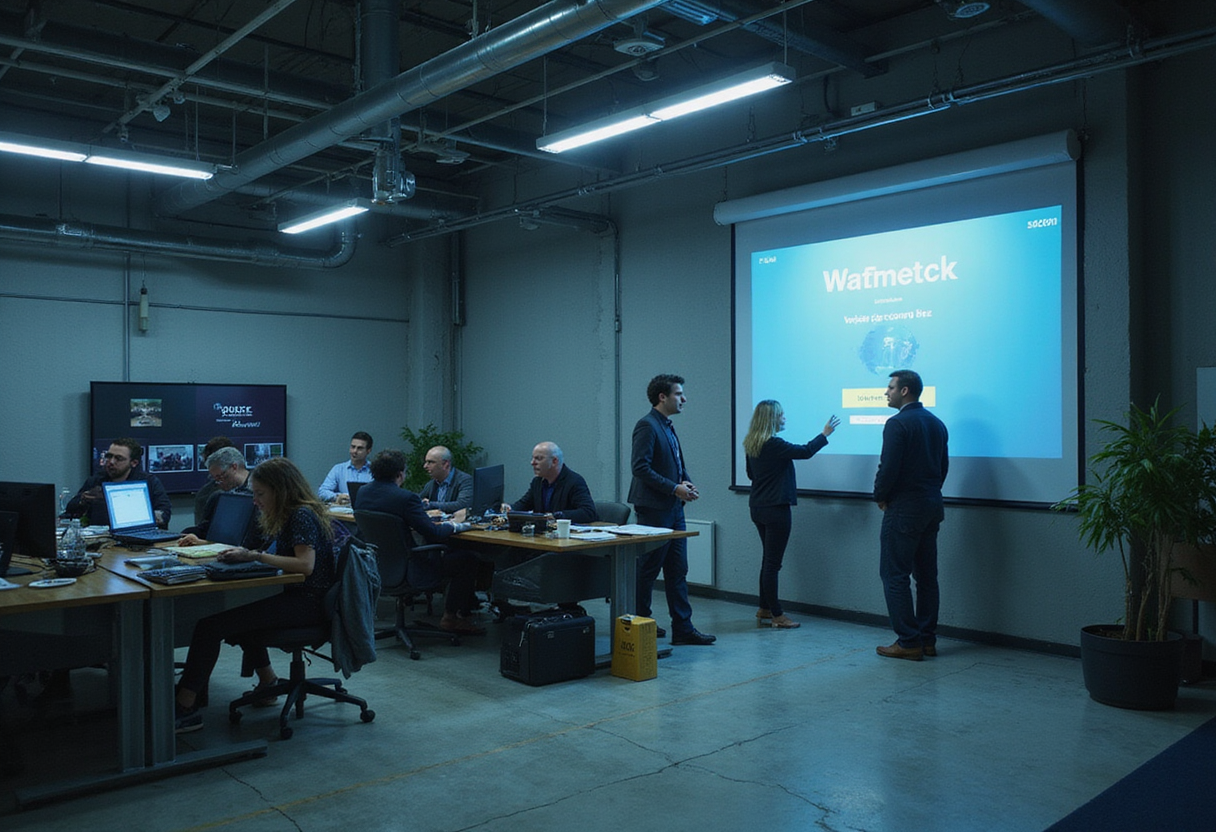
An iotforall.com analysis argues that industrial IoT cameras built a decade ago for human viewers and remote dashboards no longer fit the AI era. Neural networks now consume raw sensor data on-device. Latency, power, and bandwidth budgets have shifted from display to inference.
What changes when a camera feeds a model rather than a person?
Two physical constraints drive the redesign. A convolutional or transformer-based vision model benefits from lossless or near-lossless bit depths, often 10 to 12 bits per channel.
Human-facing pipelines typically discard this fidelity after JPEG or H.264 compression. AI inference tolerates higher sensor noise than the human eye but penalizes motion blur and rolling-shutter artifacts more harshly than a 30-frame-per-second monitor.
The result is a sensor interface that looks very different from the MIPI-CSI2 or GigE Vision links that dominated the 2015–2020 generation.
Color filter arrays introduce another wrinkle. A standard Bayer pattern discards two-thirds of incident photons at every pixel location. For human viewing, demosaicing recovers a plausible image. For AI inference, especially for defect detection or metrology tasks, the raw pattern carries diagnostic information that demosaicing destroys.
Where test and measurement must follow
The shift forces a revision of the test stack. Frame-to-frame jitter, measured in microseconds, becomes a first-class metric, as does deterministic latency from photon arrival to inference output.
Engineers who used to characterize cameras with an X-Rite chart and a luminance meter now need timing instruments that resolve synchronization at the millisecond or sub-millisecond scale, especially when the camera participates in a multi-sensor fusion array.
Data quality at the edge raises a second concern. AI models trained on compressed video can inherit the compression artifacts of the training set. Vendors that move processing on-chip must show that the raw Bayer or monochrome data fed to the accelerator still meets the signal-to-noise ratio and dynamic-range thresholds of the training corpus.
EMVA 1288 specifies a dozen parameters that let buyers compare sensors independent of vendor marketing. Recent revisions added measurements for global-shutter efficiency and pixel-level crosstalk, both of which matter more for AI inference than for human display.
The compliance question
The practical question for system integrators is whether their qualification procedures were written for the cameras they are now replacing. A factory-floor installation certified under ISO 13849 or IEC 61508 for functional safety was reviewed on the assumption that the camera was an inert sensor with deterministic data flow.
Adding an on-device inference engine changes that assumption. The camera now makes a decision, not just a measurement, and the standard revision that governs how to test that decision remains under negotiation in working groups.
What buyers should ask vendors
Specification sheets still dominate purchasing decisions in industrial imaging, but the relevant specifications have moved. Request the measured latency distribution, not just the average frame rate.
Request the SNR under the specific lighting and temperature envelope of the deployment. Request the model-update procedure and the on-device fallback when inference confidence falls below threshold. The datasheet bullet that once read "1080p at 30 fps, H.264" now reads as a warning sign of a legacy architecture.
Bottom line
The transition from human-displayed video to machine-consumed vision is not a firmware update. It changes the sensor, the interface, the processing pipeline, and the test plan that an instrumentation team must sign off on.
via Google News: Sensors and industrial IoT (Source)
Filed under
- industrial-iot-cameras
- ai-inference
- emva-1288
- image-sensors
- machine-vision
More from Amara Osei
Show full bio
Senior reporter covering industry trends and analytics at Testbench Report.
69 articles
Application notes
- Quality Magazine: Machine Vision Moves to On-Camera Inference
- Allied Vision Pushes Edge AI into VSWIR Spectral Band via Alecs
- Machine Vision Veterans Reflect on Three Decades of Sector Change
- VISION 2026 Stuttgart: 100 Gbit/s Imaging Heads a Bandwidth-Driven Agenda
- Machine Vision as the Optical Floor of AI-Driven Automation