TB-3578 · REV B · Technical newsheet
Metrology & CalibrationDevice profile
Digital twins and AI/ML advance condition monitoring in nuclear plants
A Frontiers review surveys digital twins and AI/ML for nuclear condition monitoring, where sparse fault data and regulatory qualification remain the gating constraints.
By Amara Osei3 min read615 words
Features
- Frontiers published a review of digital twin and AI/ML advances for nuclear condition monitoring
- Digital twins can generate synthetic fault data to train ML models where real fault records are sparse
- Applications covered include fault detection, remaining-useful-life prognostics, and sensor anomaly detection
- Published results rely on simulations and historical datasets, not regulator-qualified live deployment
- Adoption hinges on what evidence nuclear regulators will accept for maintenance and calibration changes
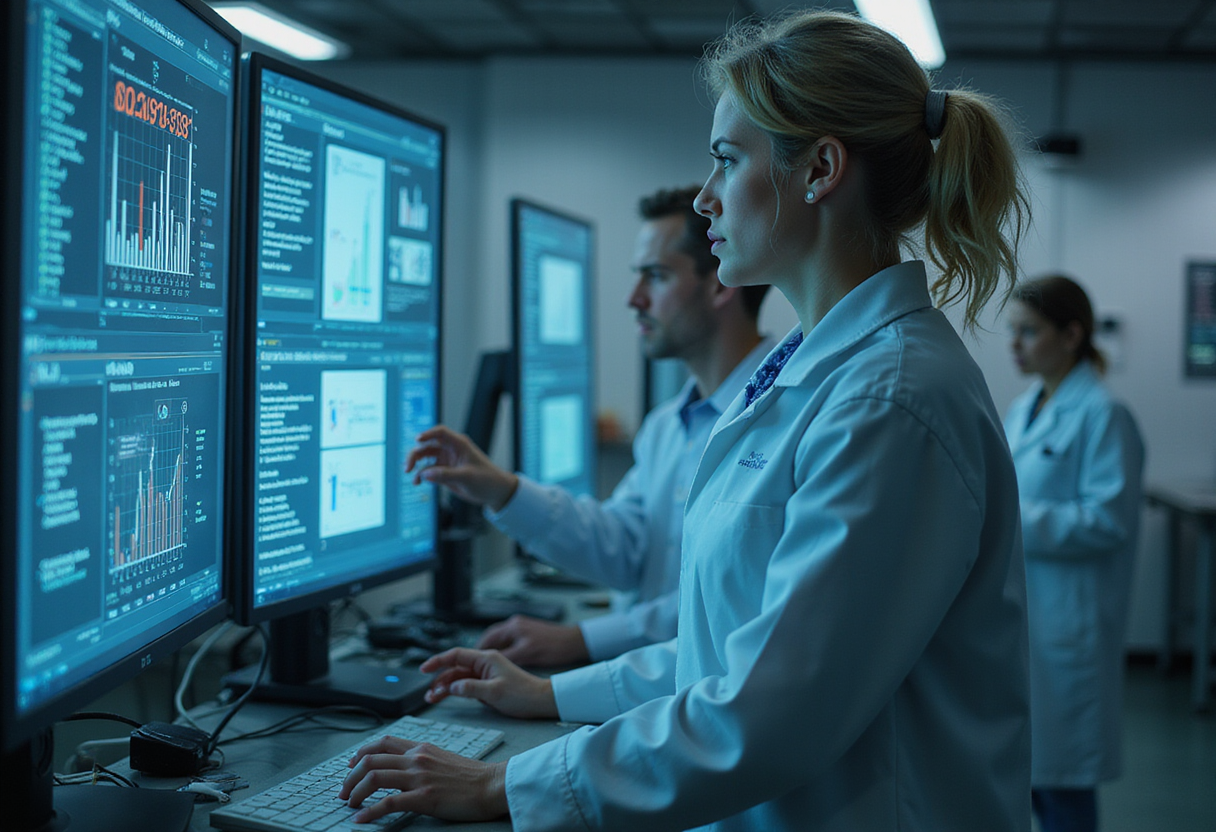
A new review published in Frontiers surveys how digital twins and AI/ML techniques are being applied to condition monitoring in nuclear applications, a domain where instrument qualification, calibration intervals, and safety-case traceability have historically slowed adoption of data-driven methods.
The nuclear sector's interest is straightforward economics and physics. Plant assets age under neutron flux, thermal cycling, and corrosive chemistry, and unplanned outages carry costs measured in millions of dollars per day. Condition-based maintenance — intervening when sensor data says degradation is underway, rather than on a fixed schedule — promises to cut that exposure while preserving safety margins. Digital twins, virtual replicas of physical systems updated with live plant data, and machine-learning models trained on operational histories are the two enabling toolsets the review examines.
Why nuclear is a hard case for AI-driven monitoring
The review frames the central tension: AI/ML models excel where abundant labeled training data exists, but nuclear components rarely fail often enough to generate it. Fault signatures in pumps, valves, heat exchangers, and instrumentation channels are sparse, and the data that does exist is often proprietary, plant-specific, and irregularly sampled. The authors point to digital twins as a way around the data scarcity — physics-based simulation models can generate synthetic fault data that trains learning algorithms when the real fault record is thin.
That hybrid approach carries a metrological implication. A twin is only as good as its underlying physical model and the sensor data feeding it. Drift in the very instrumentation being monitored — the traditional concern of calibration programs — propagates directly into the twin's state estimate. The review's scope therefore touches both model architecture and the sensing layer that anchors it to reality.
What the applications look like
The survey covers condition monitoring use cases across nuclear plant systems where operators now deploy or trial these methods:
- Early fault detection in rotating machinery and process equipment
- Prognostics — estimating remaining useful life of components before functional failure
- Anomaly detection in sensor and instrumentation channels, complementing conventional calibration checks
- Plant-wide integration, where twins fuse models with live data streams for operational decision support
The framing throughout ties each technique to the environment it serves: high reliability requirements, long asset lifetimes measured in decades, and regulatory oversight of any software that touches safety-related functions.
Measured performance versus the hype
A metrologist reading this literature should keep the evidentiary hierarchy in mind. Published results typically come from simulations, test loops, or historical plant datasets — conditions that flatter model performance compared with deployment on live, noisy, partially instrumented systems. The review sits in the academic literature, so its claims are peer-reviewed but not qualification-tested: no nuclear regulator yet accepts an AI prognostic model as a basis for extending a calibration interval or deferring a safety-related inspection without substantial additional justification.
That gap between demonstrated accuracy on retrospective data and qualified, deployable decision tools is the field's defining constraint. It is also where the buying decision changes for utilities: the question is not whether a model can detect a seeded fault in a laboratory dataset, but whether its false-alarm rate and missed-detection rate hold up under plant conditions over a full operating cycle.
The compliance question
The development raises an adoption question that the nuclear industry has faced repeatedly with software-based systems: what evidence will regulators require before AI/ML condition monitoring outputs can justify changes to maintenance schedules, surveillance frequencies, or calibration programs? Until that path is codified — as it eventually was for digital I&C platforms — digital twins in nuclear plants will live in the advisory layer, informing engineers without yet displacing the established deterministic margins.
via Google News: Condition monitoring (Source)
Filed under
- digital-twins
- condition-monitoring
- machine-learning
- nuclear-power
- calibration
More from Amara Osei
Show full bio
Senior reporter covering industry trends and analytics at Testbench Report.
69 articles
Application notes
- Edge AI Moves Motor Predictive Maintenance Onto the Control MCU
- Nature paper applies reinforcement learning to IIoT streaming maintenance
- Nature publishes convolutional autoencoder approach to condition monitoring
- Wireless Vibration Sensors and Machine Learning Reshape Pump Health Monitoring
- One-Class Anomaly Detection Screens New Lines Before Failure History Exists